Policy Area Index (PAI)
A geopolitical tool
vDraft — Working Version for Global Consultation
1. Purpose of the PAI
The Policy Area Index (PAI) is a global classification system designed to organise all domains of public governance. Its purpose is to provide a unified, coherent framework for understanding, comparing, debating, and coordinating policy across every level of governance—from local communities to blocs and the global level.
A functional global democracy requires a shared language for policy domains. Without a common taxonomy, governance becomes fragmented, communication becomes unclear, and multi-level decision‑making breaks down. The PAI provides the structural backbone that enables transparency, knowledge‑based participation, institutional coordination, and long‑term planning.
2. Why “Policy Area Index (PAI)”?
The term Policy Area Index conveys clarity of purpose:
- Policy area signals that the index reflects the domains in which governance operates.
- Index signals taxonomy, order, and structure—a system that can be searched, compared, and expanded.
The acronym PAI is deliberately close to the English word “pie”, which in economics often refers to the total amount of resources available in a polity. Policymakers discuss how the “pie” is divided among sectors such as health, education, energy, or infrastructure. The PAI similarly maps how society’s attention, resources, and authority are distributed across governance domains.
In this sense, the PAI can be seen as the governance pie: a structured representation of the full spectrum of public responsibilities.
4. Foundations of the PAI
The PAI draws from the strongest international standards for classifying public governance, combining four foundational sources:
A. COFOG – UN Classification of the Functions of Government
The most globally recognised taxonomy for public budgets and state functions. COFOG categories directly reflect how governments structure responsibilities.
B. EU Policy Fields
The European Union maintains one of the most advanced, modernised sets of policy domains, including climate, digital affairs, internal markets, transport, justice, and security.
C. OECD Governance Domains
OECD structures emphasise cross‑disciplinary knowledge, education, labour, economic policy, and technological development.
D. Planetary Governance Domains
Areas not historically part of national systems but essential in the 21st century:
- biosphere integrity and planetary boundaries,
- climate restoration and carbon cycle governance,
- near‑Earth space and satellite coordination,
- AI governance and algorithmic oversight,
- WMD security and nuclear oversight,
- global commons stewardship.
The goal of the PAI is not to choose between these frameworks but to combine them into the most robust and future‑ready policy taxonomy possible.
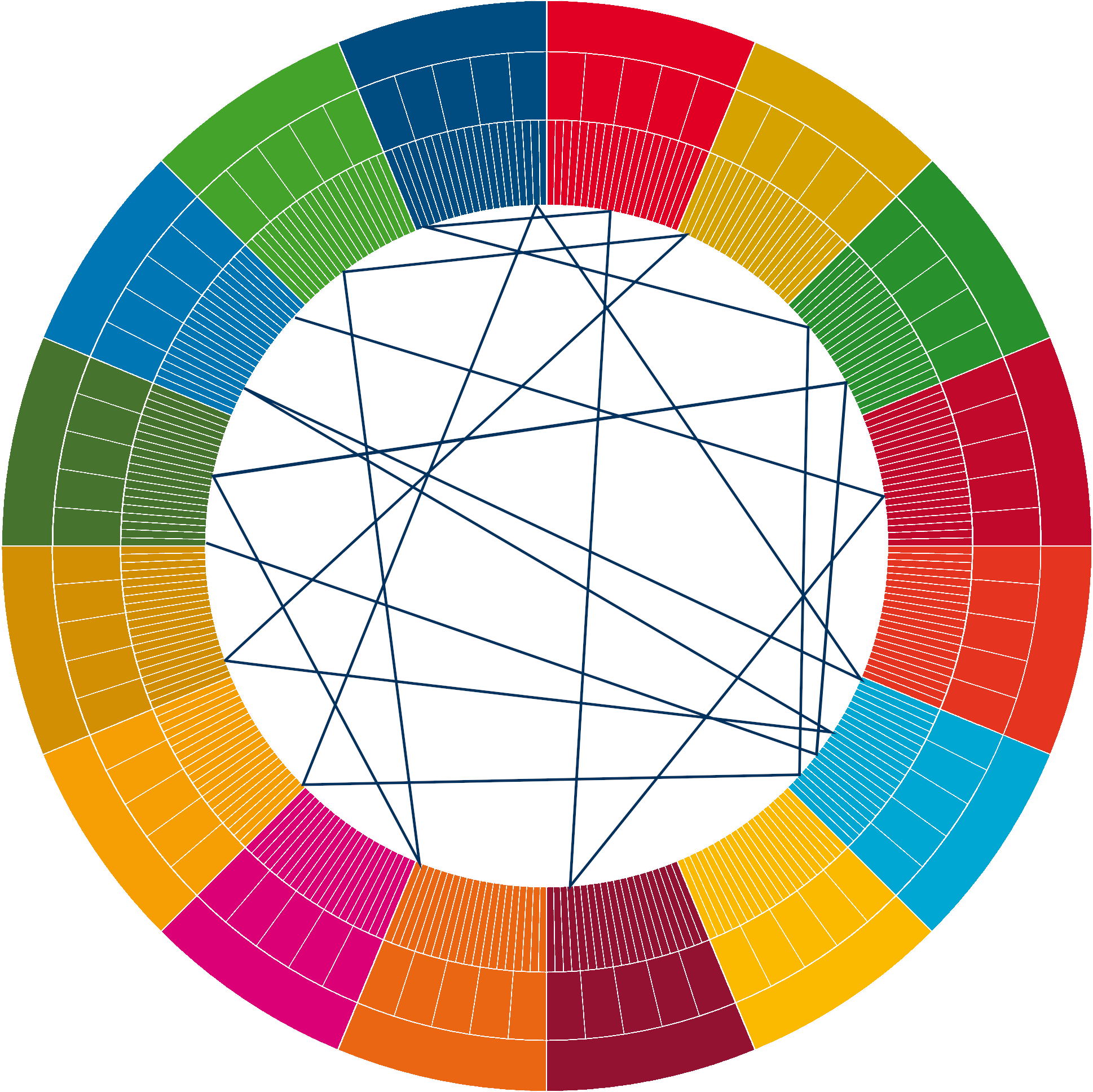

The PAI with topic combinations
This is a concept illustration of how the PAI is thought to be structured. Like in the “earthwheels”, we use a circle, simply because the PAI also constitutes a phenomenon where wholeness and completeness are the basal traits.
The colored sectors represent the main policy areas (food production, health care, education, regional spatial planning, infrastructure, etc.)
The three rings represent subdivisions, and the lines represent combinations of specific topics.
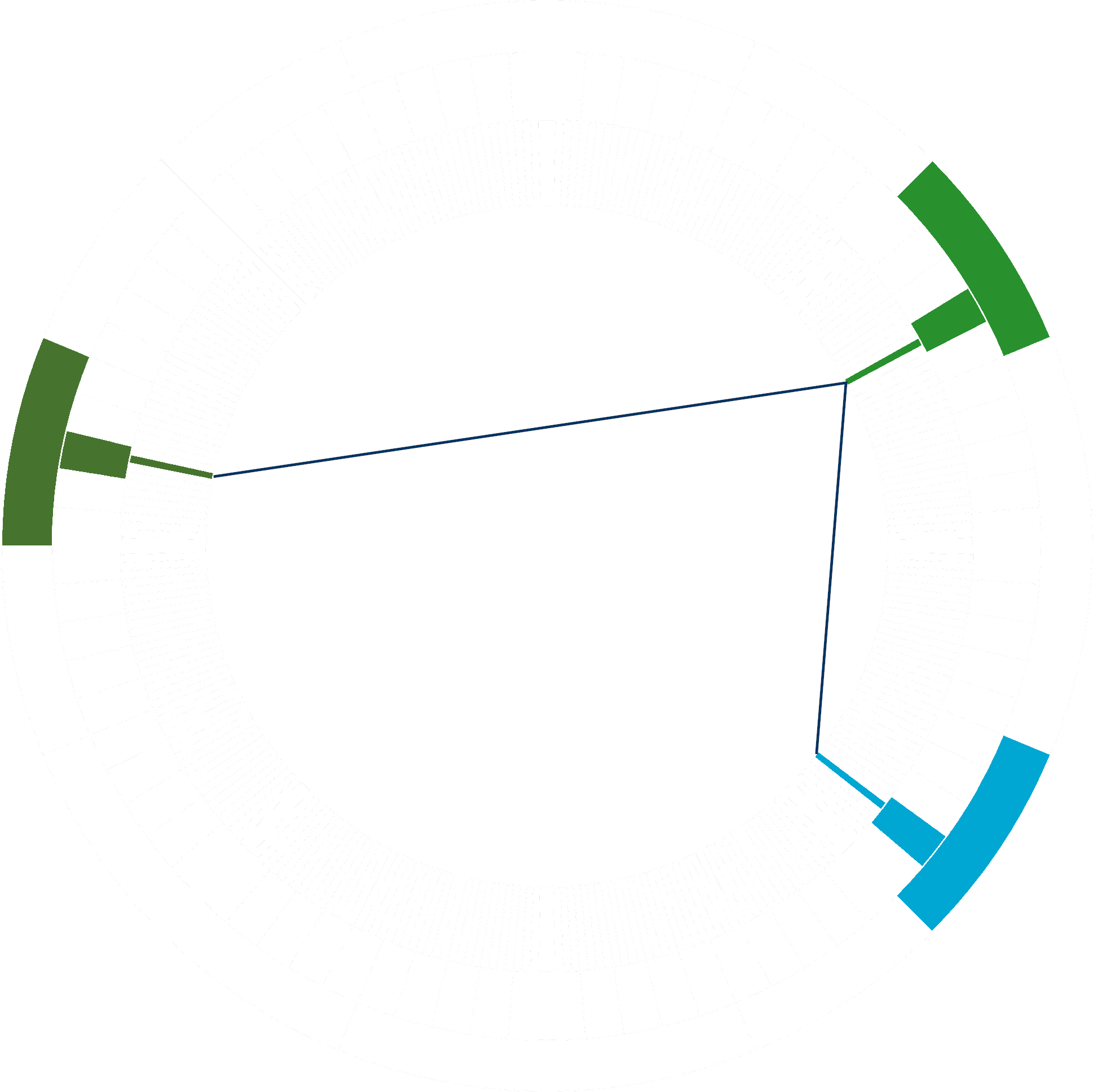
Example of a topic combination
Here, three specific sublevel policy areas with identified relations are connected, and this combination will have its own code in the PAI, just like single topics.
5. Structure of the PAI
The PAI is organised as a multi‑level index:
- Top‑level sectors: broad policy domains (e.g., Health, Transport, Climate, Finance, Education).
- Sub‑sectors: major subdivisions within each domain.
- Component areas: detailed policy components enabling specialised analysis and planning.
This hierarchical model supports:
- clarity,
- comparability between regions,
- multi‑level governance coordination,
- integration with AGORA’s deliberation and voting tools.
The circular diagram is used as a visual method to represent the wholeness and interconnectedness of policy domains. The colours are purely illustrative and will evolve as the index matures.
6. How the PAI Functions in Governance
The PAI is the backbone that organises how citizens interact with governance. PAI helps ensure that political debates are grounded in verified information and that participation reflects both knowledge and democratic equality.
A. In the Councils
The Councils maintain the PAI to:
- perform ethical, scientific, and cultural analysis,
- track policy coherence across levels,
- detect blind spots or emerging issues,
- coordinate updates to the index,
- maintain standards across policy domains.
B. In Multi-Level Governance
PAI provides a common reference for:
- bloc harmonisation,
- regional policy mapping,
- local-to-global consistency,
- crisis coordination and planning.
C. In the Branches of Power
The branches use PAI to:
- structure legislative committees,
- organise executive ministries and agencies,
- interpret judicial cases involving sector‑specific disputes,
- align responsibilities with subsidiarity.
D. In AGORA
AGORA uses the PAI to structure:
- deliberation rooms,
- educational modules,
- verified knowledge flows,
- knowledge‑weighted voting,
- election eligibility and competence profiles.
The PAI is the backbone that organises how citizens interact with governance.
7. Stewardship and Maintenance
The PAI is not a static index. It evolves through a structured, democratic, and expert-driven process led by the interconnected system of Councils—Ethics, Science, and Culture—at all governance levels.
The Councils have three key responsibilities:
- overseeing periodic revisions of the PAI,
- ensuring that new policy domains (e.g., technological, ecological, cultural) are integrated,
- coordinating updates across levels via AGORA.
This makes the PAI a living instrument that adapts to humanity’s changing needs.
2. Why the SDGs Cannot Be the Basis
The UN Sustainable Development Goals (SDGs) are important global aspirations, but they are not a suitable foundation for a governance taxonomy. SDGs are outcome‑oriented goals—not policy domains. They mix societal targets (e.g., ending poverty) with cross-cutting principles (e.g., partnerships) and specific issue areas.
For a governance system, this creates several limitations:
- SDGs do not map to ministries, departments, or legislative committees.
- SDGs omit essential domains: justice, defence, taxation, administration, digital affairs, AI, space, peacekeeping, and governance itself.
- SDGs combine goals with actions, whereas a policy taxonomy requires stable domains independent of temporary targets.
The SDGs therefore remain relevant as moral and developmental aspirations—but they cannot serve as the structural foundation for a global policy index.
8. Use Cases
The PAI enables:
- citizens to understand and navigate governance,
- councils to maintain standards and coherence,
- legislatures to organise committees and debate,
- executives to structure ministries and deliver services,
- judicial bodies to frame legal interpretation,
- AGORA to offer structured digital democracy,
- researchers and analysts to compare policies across blocs and regions.
9. Work in Progress
The PAI remains an evolving project. Experts across governance, academia, civil society, and the global Councils network will collaborate to refine and expand the index. The goal is to create the most complete, coherent, and future‑ready policy framework ever developed—one capable of supporting democratic global governance and the flourishing of life on Earth.
Policy Area Index (PAI)…. OLD
A geopolitical tool
To facilitate meaningful discussions on policy areas at every level of governance—from global to local—we propose the development of a global standard. This standard aims to provide a unified framework for policy discourse, adaptable to various scales of governance. Such a model should build on existing global standards, and we have found that starting with the UN Sustainable Development Goals (SDGs) as a foundational structure provides a solid and widely recognized basis for our framework.
Circular Design and Structure
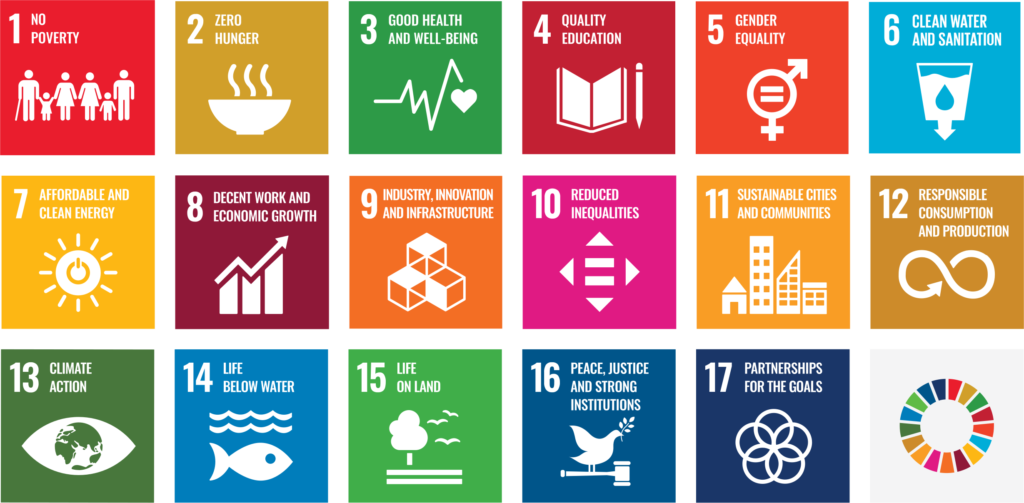
Our model is represented as a circular diagram with 16 sectors and three concentric rings surrounding a central circle. Each sector corresponds to one of the 16 first SDGs, with the colors reflecting the respective UN goals. The rings illustrate subdivisions within each policy area:
- Second Ring: Divides each sector into primary sub-areas, representing the main components of each policy area.
- Third Ring: Further subdivides these into more detailed policy components, allowing for in-depth analysis and planning.
- Central Circle: Serves as a hub for connections between related policy areas, highlighting the interdependence and synergy between them.
Framework Rationale
- Starting Point: We have chosen the 17 UN SDGs as the foundation for this model. Sixteen goals are applied as specific policy areas, while the 17th goal, Partnership for the Goals, represents the overarching aim of global cooperation. In the United Earth vision, this goal also embodies the connections and synergies between different policy areas, highlighting the importance of a coordinated global effort.
- Adaptability: While the model incorporates existing global standards, it is designed to be flexible and responsive to evolving needs. For instance, certain policy areas like defense or space-related activities are not explicitly represented in the SDGs. In our model, these can be integrated under the 17th goal, emphasizing their role in global cooperation.
- Addressing Dynamic Goals: Some SDGs focus on achieving specific outcomes, such as eradicating extreme poverty (Goal #1: No Poverty). In the context of our policy model, these areas might evolve into preventive and responsive strategies once their primary objectives are met. This reflects the model’s inherent flexibility—it is not a static framework but one that is expected to adapt and evolve over time in response to global developments.
Purpose of the Model
The Policy Area Model is designed to achieve several key objectives:
Promotion of Global Cooperation: By incorporating the 17th SDG, Partnership for the Goals, as the connecting framework, the model underscores the importance of collaboration and cooperation. It emphasizes that no single policy area exists in isolation and that achieving sustainable development requires a coordinated, global effort.
Unified Framework: It seeks to create a common language and structure for discussing policy areas across different levels of governance. By aligning with the UN SDGs, the model offers a globally recognized starting point, ensuring relevance and coherence in discussions from local to global levels.
Holistic Approach: The circular design symbolizes wholeness, reflecting the interconnectedness of policy areas. This is crucial for addressing complex, multi-faceted global challenges that cannot be tackled in isolation. The model encourages integrated thinking and planning, promoting solutions that consider the broader impact on all sectors.
Adaptability and Evolution: The model is not static; it is designed to evolve in response to changes in global conditions and priorities. As new challenges emerge or existing goals are achieved, the model can be updated to reflect new realities, ensuring it remains relevant and effective over time.
Work in Progress
This model is a preliminary attempt to illustrate the idea of a unified policy framework. We recognize that this is a work in progress and welcome input from a diverse range of experts and practitioners. The goal is to refine and expand this model through collaboration, ultimately creating a tool that supports global democratic governance and the achievement of sustainable development.