United Earth initiative
Earth democracy
Why it is needed, what it is, and how we build it
This document contains the theoretical foundation of the UE initiative.
We invite everyone to an open discussion on how governance structures can evolve to address global challenges while safeguarding cultural identities within a shared democratic framework.
Claim your Earth Citizenship (EC) and influence at agora.united.earth
PLEASE MAKE SURE YOU HAVE THE LATEST VERSION OF ANY DOWNLOADED DOCUMENTS!
After major upgrades, the web version is compiled into downloadable documents (DOCX/ODT/PDF/MD) available at united.earth/en/documents
This is done for transparency and to preserve a record of its development.
Preface
The first versions of this material were drafted by a small group of engaged individuals calling themselves Worried Earthlings (WE). They have chosen to remain anonymous, partly due to security concerns because of the controversial character of their ideas, but mostly to foster a culture focused on our shared planet and the global society, rather than on individuals.
The name Worried Earthlings — WE — reflects the perspective from which the initiative emerged. Its participants share a strongly developed global awareness and sense of identity as Earthlings. Earth and humanity became the primary political frame through which they approached the problems addressed here, without requiring the abandonment of other personal identities.
WE do not assume that others will share this global identity with the same intensity. Their proposal instead asks whether enough people can develop a global perspective strong enough to recognise humanity as a political community where genuinely global problems require shared democratic action.
WE are convinced that dominant individualism, together with obsolete forms of tribalism, obscures the fact that many of the forces shaping individual and local life now operate globally without democratic control.
Global democratic governance is necessary precisely to protect individual freedom, diverse identities and local societies against these forces.
A fundamental hypothesis coming out of their ideas is that the principle of the sovereign nation-state, or more precisely the connection between cultural identity and governance, is the major obstacle to solving global existential threats.
WE and the United Earth initiative understand how sensitive this issue is, and urge all fellow Earth citizens to join this critical and challenging discussion with mutual respect and solidarity.
The proposal is no threat to cultural identity, like ethnicity, nation, religion, and ideology. It is, though, a rejection of the idea of using identity to exclude others by dominating governance.
The inclusive nature of this project seeks only to promote cooperation and bold thinking in the face of shared global problems threatening us all.
A geopolitical visualisation tool
The earthwheel is both a symbol and an analytical tool. It is designed to make visible a structural feature of today’s geopolitical condition that is difficult to see in conventional hierarchical diagrams: that the hierarchy of governance is incomplete as a whole, and that this incompleteness appears most clearly as a missing global centre.
The combined illustration below brings together three views of the same problem: the populated earthwheel, the empty five-level schema, and the linearised hierarchy. Read together, they show both why the conventional linear form remains useful and why the earthwheel was needed as a complementary model.
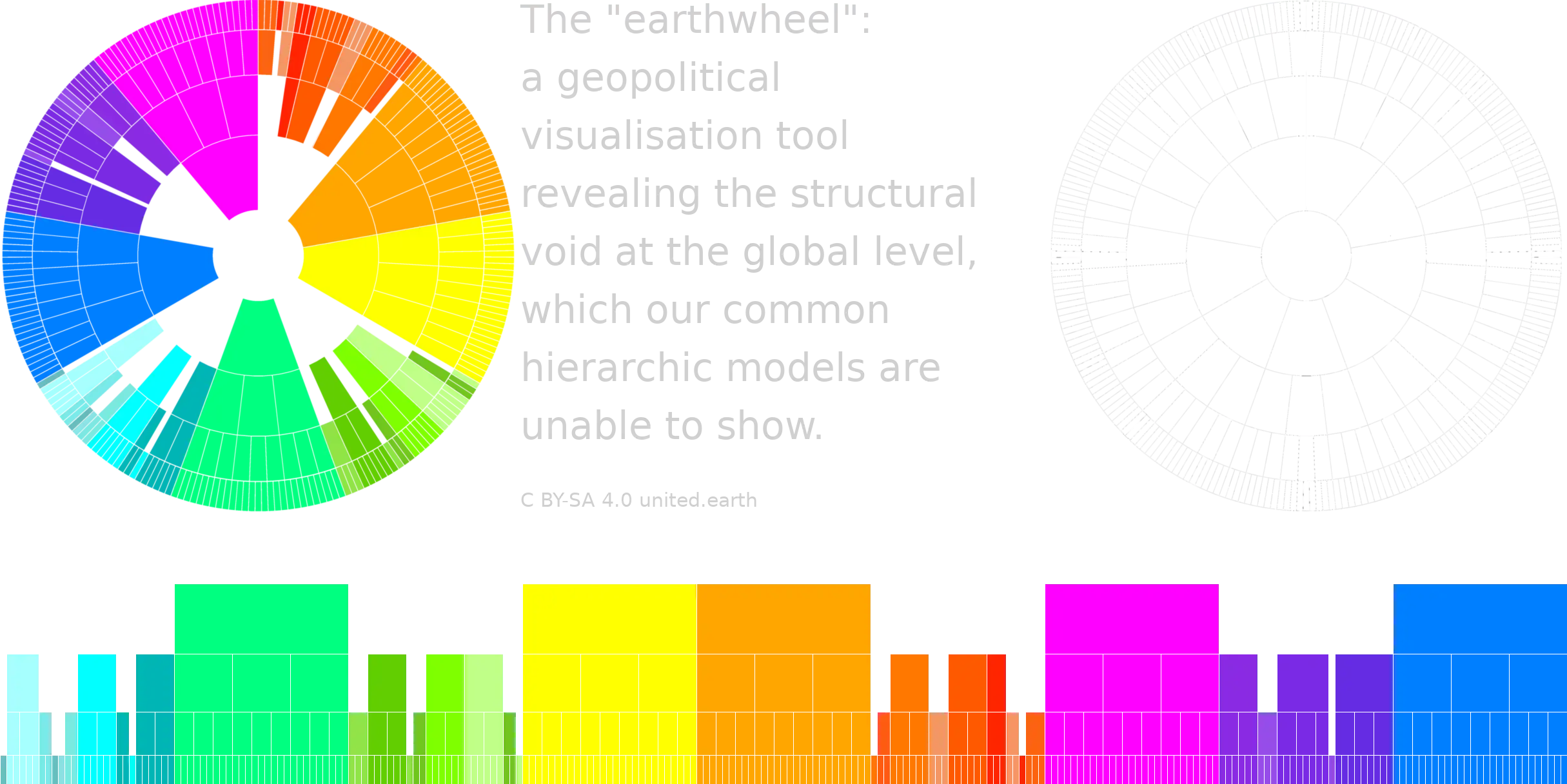
The linear hierarchy is the familiar way of representing nested political levels. It has real strengths. It is immediately legible, it can be extended horizontally with little loss of readability, and it can in principle scale toward a far more empirically complete representation of the world’s nearly 200 sovereign states. In that sense, it is well suited for enumeration and for showing large numbers of distinct units within a vertical hierarchy.
Its weakness is more structural. Once the same geopolitical condition is unfolded into a linear arrangement, what is missing no longer appears as a single absence. The gaps are dispersed between columns, and attention is drawn mainly toward the individual units and their separate heights. This makes the form analytically weaker at revealing a central fact of the present world order: that the global level is absent as such, and that the broader hierarchy therefore remains incomplete.
The empty five-level schema shows the same model in its most reduced form: global, bloc, sub-bloc, regional, and local. It presents the intended geometry of a complete hierarchy before empirical irregularities are introduced. Read alongside the populated earthwheel, it clarifies that the present geopolitical condition is defined not only by the entities that exist, but also by the levels that are absent, fragmented, or unevenly developed.
The earthwheel can be used to analyse geopolitical systems across several dimensions, including:
- Completeness – the degree of organisational development at each level, including whether hierarchical relations exist or are absent
- Balance – proportionality in geographic size, population, military power, economic strength, or other relevant variables
- Sovereignty vs. subsidiarity – how authority and responsibility are distributed between levels
- Identity and legitimacy – how cultural identity relates to political legitimacy, function and democratic authority within each governance entity
The model is deliberately highly abstract. To make the structural point visible, the number of units shown at each level is sharply reduced. The earthwheel is therefore not a literal cartographic rendering of the world’s sovereign states, but a conceptual compression. Its purpose is not to enumerate everything, but to show something that enumeration tends to obscure: where the hierarchy is complete, where it is incomplete, and how that incompleteness defines the geopolitical system as a whole.
What is global democracy?
What principles must it be based upon?
What could a democratic geopolitical system actually look like?
What kind of civilisation could this create?
What will it be like to live and participate in it?
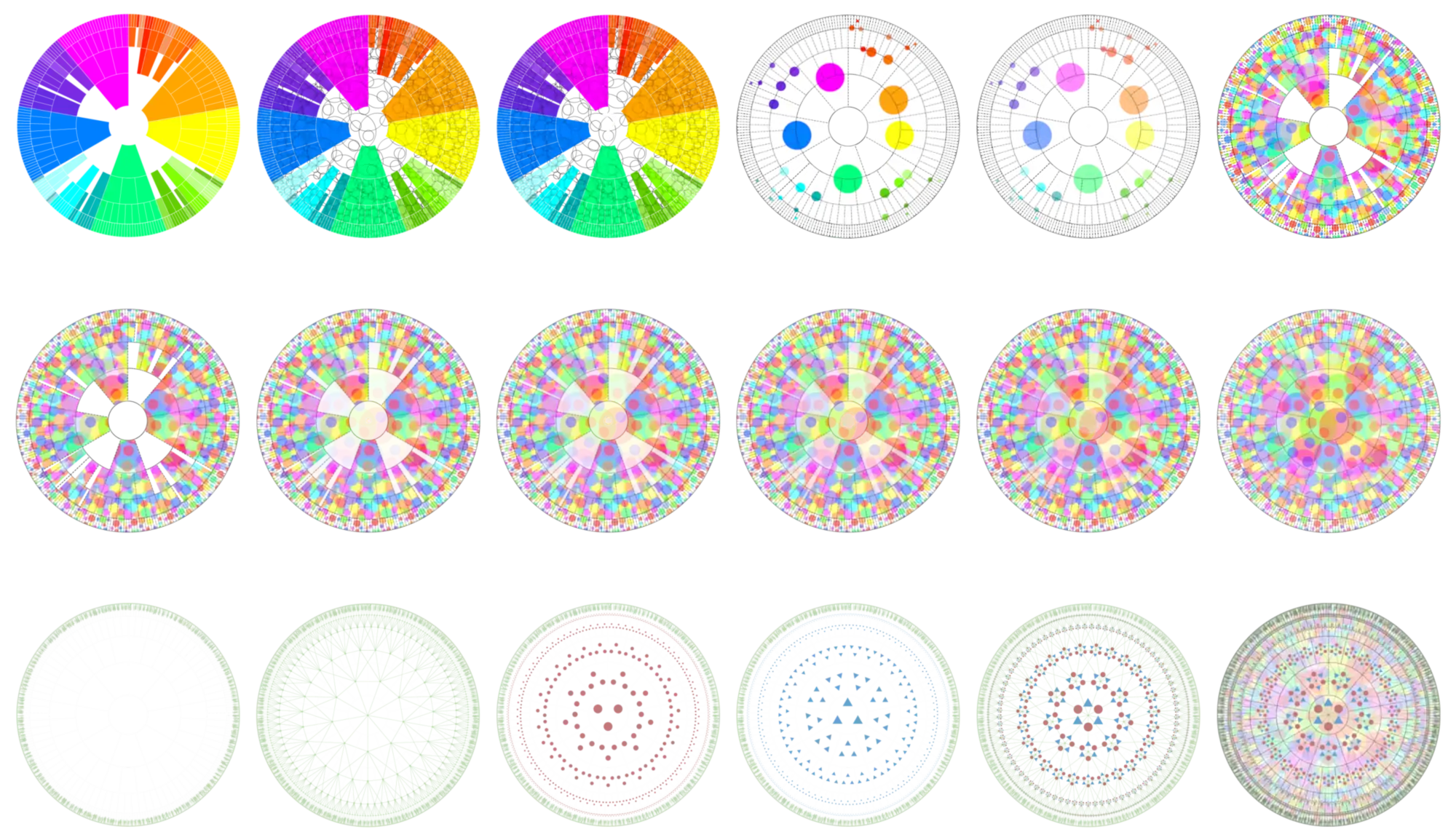
Overview (Earthwheels):
V2026-09-07
Summary
This page develops a first-principles structural model for a democratic global constitutional order capable of operating coherently from the local to the planetary level.
The model rests on foundational preconditions, of which the first four are: the intrinsic value of life, the commons principle, the constitutional allocation of authority through subsidiarity, and equal political standing across cultural identities.
The proposed architecture combines a vertical hierarchy of governance levels with a set of functional layers operating across them. Authority is distributed from local governance units, or loci, to the global state, while AGORA, the SEC Councils, and the three branches operate across all levels. The Policy Area Index (PAI) provides the shared classification of policy areas throughout the architecture, while Science, Ethics and Culture (SEC) provide the corresponding knowledge and competence bases used for informed participation and institutional judgement.
Earth Citizens exercise substantive democratic authority through AGORA, while parliaments organise and formalise legislative processes at each level. AGORA connects continuous direct participation with publicly governed learning and topic-specific knowledge, so that democratic influence is based on demonstrated understanding rather than wealth, identity, affiliation, or party representation.
Earth Parliament is the highest legislative institution within the global constitutional order, and valid global law prevails over conflicting law at lower levels. Its legislative competence is constrained by constitutionally defined responsibilities, subsidiarity, necessity, proportionality, and judicial review.
Executive power follows a territorially distributed structure. Earth Government exercises direct territorial executive authority within the global zone and direct executive authority within other constitutionally defined global domains and functions, while blocs hold constitutionally protected territorial executive authority within the blocal zone. Lower governance levels exercise the responsibilities assigned to them under subsidiarity.
The following chapters describe how this institutional architecture supports collective security, economic resilience, ecological stewardship, Earth civilisation, and Earth Citizenship.
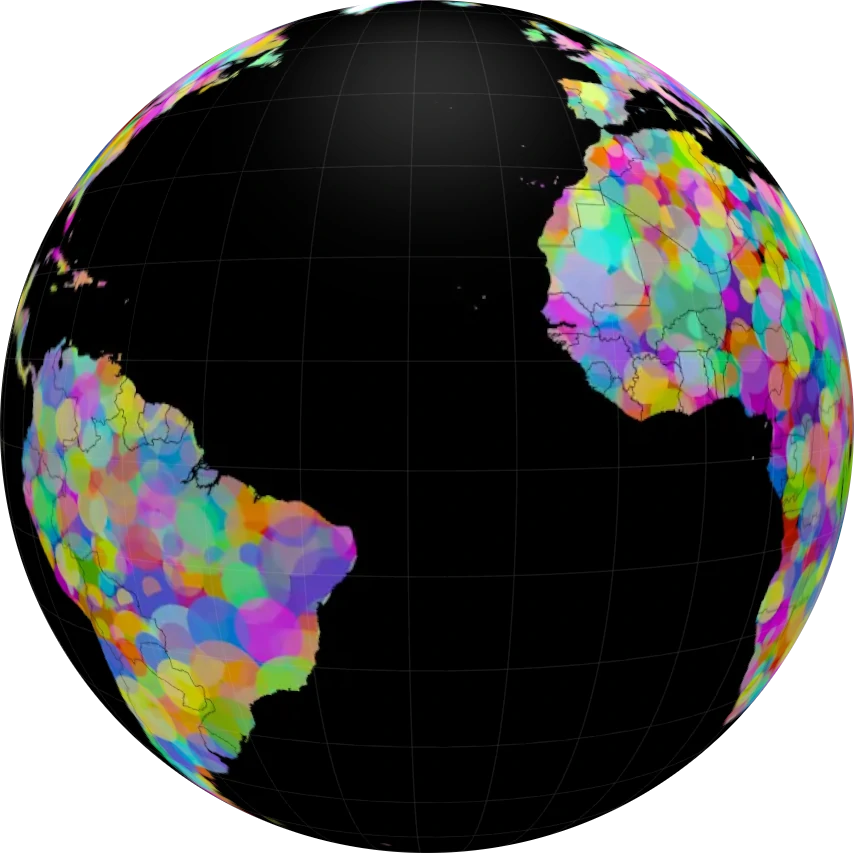
A shared human landscape
A peaceful, prosperous, socially just, and sustainable Earth civilisation is possible. Achieving it requires a political structure capable of coordinating planetary action while protecting local autonomy, cultural diversity, democratic freedom, and life itself.
The WHY page established why humanity must build democratic global governance before an acute crisis forces global authority to be constructed in panic and concentrated from above. This page presents a first-principles model of what that democratic order could be.
The proposal combines a single global constitutional order with constitutionally enforced subsidiarity, distributed executive power, direct knowledge-based democracy, and equal political standing across cultural identities. It is presented as a working structural blueprint to examine, challenge, improve, and ultimately build through a global democratic process.
CC BY-SA 4.0 United.Earth Inititaive
7. Foundations and enablers
Humanity needs a geopolitical system capable of resolving conflicts, coordinating urgent responses, and fostering long-term solutions that protect the biosphere and secure a stable future. At the same time, this system must be possible to implement step by step, honouring cultural identities and ensuring broad democratic participation throughout the transition.
While many principles ultimately shape such a system, the first four sections below form its essential constitutional foundation. GeoWeMe and the Policy Area Index then provide the analytical and structural frameworks through which that foundation can be applied coherently.
7.1 The intrinsic value of life
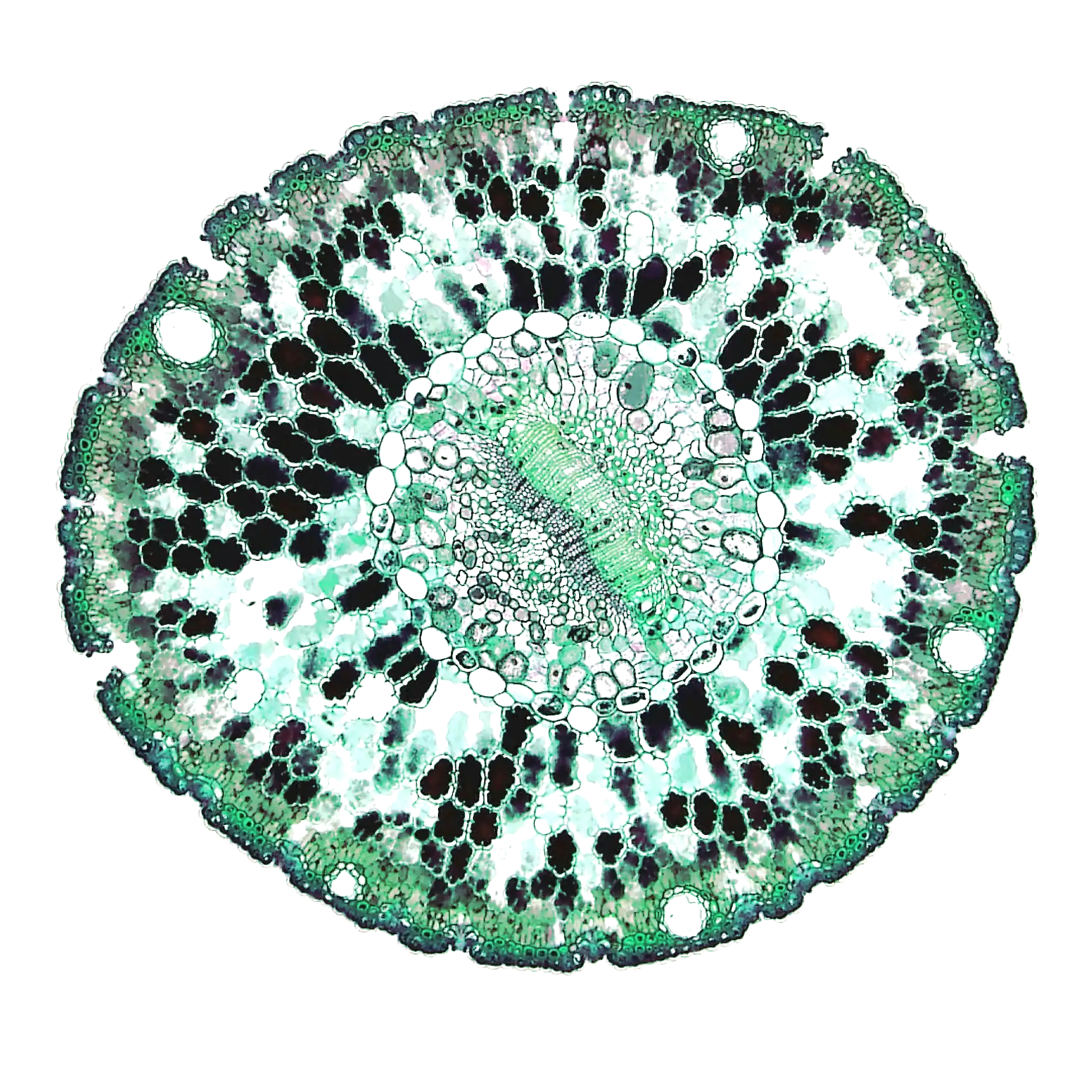
Life is the foundational premise
Life exists before belief, identity, or governance. It is the condition upon which all human systems ultimately depend.
Humanity does not agree on where life comes from, nor on all ethical boundaries governing interaction with it. What can be established as a shared constitutional starting point is a single foundational premise:
Life has intrinsic value and must be protected as far as practically possible.
Where the practical boundaries should be drawn is a question of constant ethical debate and political deliberation.
Image by Fayette Reynolds M.S.: A cross-section of a living plant stem
This statement does not claim universal truth, metaphysical certainty, or moral consensus. It does not define what life is, why it exists, or how it ought to be lived. It expresses a democratically chosen minimum: that life shall not be reduced to a mere instrument, resource, or collateral effect of power, identity, belief, or ideology.
This premise is necessary not because humanity agrees on its justification, but precisely because humanity does not.
Across cultures, religions, and ideologies, people hold profoundly different beliefs about the meaning of life, death, dignity, sacrifice, nature, and authority. No single worldview commands global consensus, and none can legitimately serve as the foundation of planetary governance. For this reason, the proposed system does not derive its ethical basis from any particular religion, tradition, philosophic school, or ideology, but from a collective political decision to treat life itself as worthy of protection.
Within the present constitutional proposal, this principle applies exclusively to biological life. Artificial systems remain human-made tools and do not acquire the status or rights of living beings through intelligence, autonomy, complexity, or apparent consciousness. Any future extension of the principle beyond biological life would require an explicit constitutional amendment.
By affirming the intrinsic value of life, the system establishes a common point of reference from which ethical deliberation becomes both possible and necessary. It does not resolve all questions within bioethics, warfare, self-defence, punishment, animal use, or resource extraction. Instead, it establishes that such questions must be addressed deliberately, transparently, and with the explicit aim of protecting life as far as practically possible.
This single premise is sufficient to ground a wide range of otherwise contested conclusions, for example:
- that the systemic conditions for life — climate stability, ecosystems, biodiversity, water cycles, and the biosphere as a whole — must be actively protected;
- that war and large-scale violence constitute a fundamental governance failure rather than a normal political instrument;
- that all human beings must be afforded conditions that allow for a dignified and viable life, including fair access to resources and opportunities;
- that treating human beings as property, such as in slavery, is categorically incompatible with the system.
At the same time, the premise remains intentionally open. It does not prohibit all use of force, all taking of life, or all restriction of freedom. Such matters are subject to ongoing ethical assessment concerning proportionality, necessity, and democratic control within the system’s institutions.
The intrinsic value of life is therefore not a complete ethical doctrine, but a constitutional starting point. It obliges the system to engage continuously in ethical boundary-setting rather than to assume that those boundaries are already known.
This principle is formally articulated in the Declaration of the Rights of Life and must be embedded in the Earth Constitution. Together, they express the sole non-negotiable ethical foundation of the proposed system. GOV//ID serves a different function: it is the proposed constitutional principle separating public governance from collective cultural identity (7.4). The practical boundaries of life protection and the laws, institutions and policies developed within these proposed foundations remain subjects of democratic deliberation and revision.
Once constitutionally adopted, this principle binds all people and institutions, including those who fundamentally disagree with it. Governance must therefore sometimes constrain intentions and actions that deny the intrinsic value of life. This is not a claim to absolute moral authority, but an exercise of collectively mandated political authority, bounded by law and subject to ongoing ethical scrutiny.
7.2 The commons principle
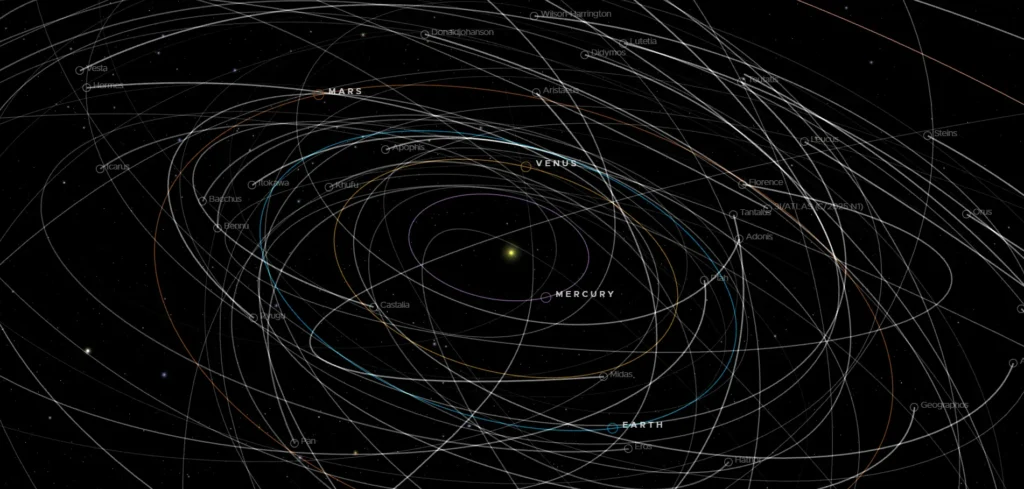
Human activity is expanding beyond Earth. We therefore propose declaring a Solar Commons: a shared constitutional framework for peaceful coordination and long-term stewardship throughout the Solar System, with the Earth-Moon system as the immediate practical priority.
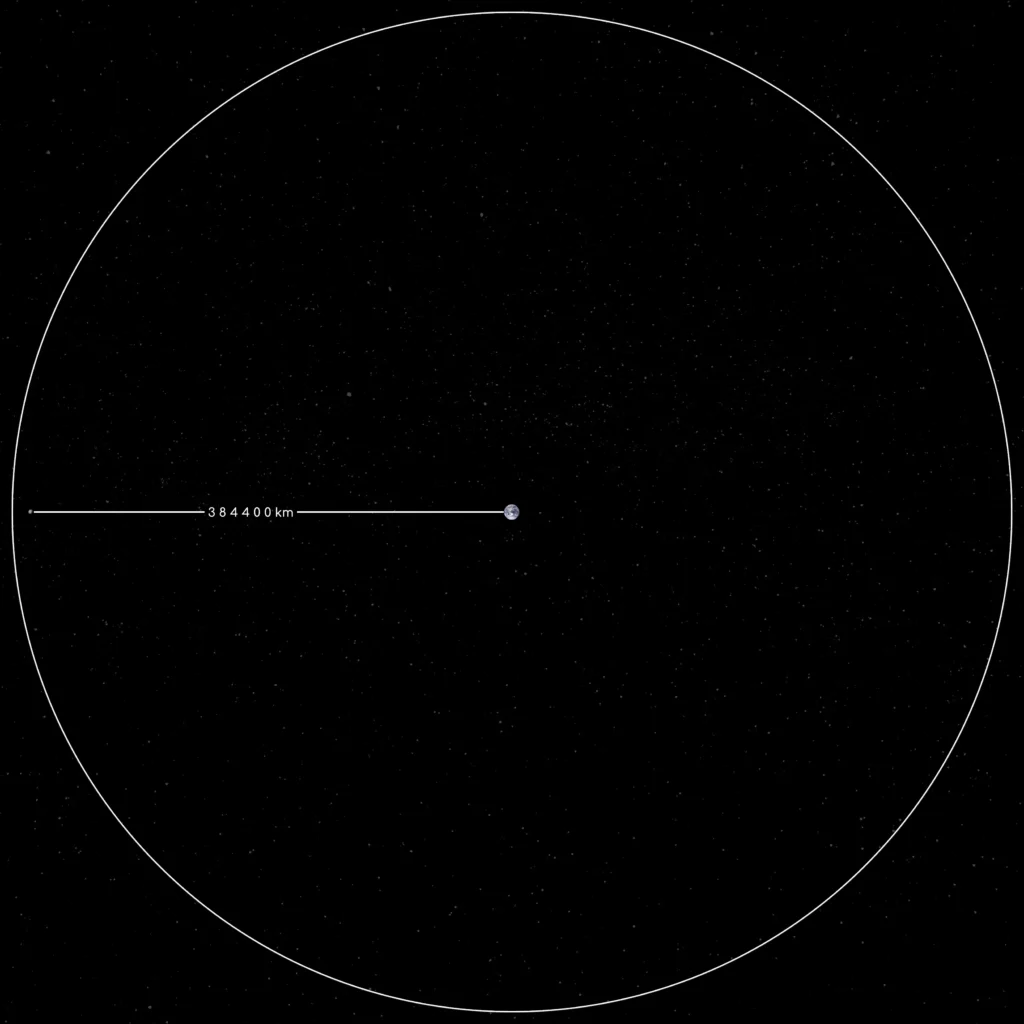
Foundation and definition
The commons principle states that the systems, spaces, resources, and conditions essential to shared life must be governed as responsibilities extending beyond individual ownership, territorial borders, and present generations.
Their common character is not created by human law. The atmosphere, the climate system, the water cycle, ecosystems, biodiversity, and the biosphere already function as interconnected conditions of life. Political and legal systems must recognise this reality and protect their integrity.
The commons are the larger systems within which humanity exists, not merely resources available to humanity. They are the larger systems within which humanity exists. The economy exists to serve people and the living planet, not the other way around. Civilisation must operate within their biophysical boundaries and accept that its immediate interests remain subordinate to the continued integrity of the whole.
The Solar Commons
Some commons are inherently planetary, while others extend beyond Earth. The atmosphere, oceans, polar domains, orbital space, and the wider Earth-Moon system cannot be governed adequately as separate territorial possessions.
Human activity already depends on shared orbital environments and is extending towards the Moon, Mars, Lagrange points, and other parts of the Solar System. The Solar Commons applies the commons principle to this emerging civilisational domain.
Space debris, satellite systems around Earth and other celestial bodies, access to Lagrange points, activity on the Moon and Mars, research programmes, resource use, and future infrastructures that cannot yet be foreseen must be governed through peaceful coordination, common rules, and long-term stewardship.
The Solar Commons establishes shared democratic stewardship over humanity’s activity beyond Earth. Research, infrastructure, resource use, settlement, and any future expansion remain subject to common rules and democratic decision-making about whether, where, and how they should occur.
First arrival, technological capacity, or physical control cannot by themselves create political sovereignty or a legitimate right of appropriation. The Solar Commons provides a framework for peaceful coordination, fair access, and long-term stewardship while preventing a new territorial, military, or commercial space race.
The extraterrestrial hypothesis remains unresolved. The United Earth initiative therefore neither assumes that humanity is alone nor treats an unverified presence as a basis for public governance. Until another intelligent presence is publicly and conclusively established, humanity must take responsibility for governing its own expanding activity throughout the Solar System.
For the immediate future, the Earth-Moon system must remain the practical priority.
Global commons
Global commons are the subset of commons whose integrity, function, or consequences are inherently planetary and therefore require overarching authority at the global level. Their global status is a constitutional allocation of jurisdiction and stewardship. Humanity holds them in trust through the global democratic system, while their legitimate use remains subject to the Rights of Life, subsidiarity, and democratically defined rules.
This category includes shared physical systems such as the atmosphere and oceans, and it can also include land territories and ecosystems whose planetary function warrants overarching global responsibility.
Some global commons extend across or beyond territorial jurisdictions and are therefore governed through global constitutional competence combined with subsidiary implementation. Others also require direct global territorial jurisdiction. Where this is the case, the relevant surface territory forms part of the global zone described under A functional governance geography.
The two concepts are therefore related but not interchangeable. Global commons is the broader constitutional category; the global zone is the territorial geography on and around Earth’s surface in which the global level itself holds the higher territorial executive authority. Population density does not by itself determine which structure applies.
Global jurisdiction concerns the functions that require global responsibility. People living within a global commons retain the same constitutional rights, Earth Citizenship, and local or regional democratic self-government as elsewhere. Indigenous peoples and other local communities retain cultural self-determination and participate directly in decisions affecting their lives and territories. Commons status applies to the territory’s shared planetary function, not to the people who live there.
The stewardship regime can differ between commons. Particularly vulnerable terrestrial commons may be governed primarily for preservation and restoration, with major exploitation treated as an exceptional use requiring strong democratic and scientific justification. Other global commons can support extensive research, transport, infrastructure, resource use, or other activity within common ecological and constitutional limits.
Trusteeship does not make humanity the owner of these domains or create a collective right of unrestricted exploitation.
Natural commons
Natural systems cross both political and property boundaries. Freshwater systems, rivers, aquifers, watersheds, fertile soils, migratory routes, forests, oceans, and connected ecosystems must be governed at the levels necessary to protect their integrity as complete systems.
The natural commons also include Earth’s remaining and recoverable natural fabric: the large, connected ecosystems required to protect biodiversity and preserve the free continuity of life processes on land and at sea.
Their common character does not mean that all land, ecosystems, or biological resources must be governed identically. It means that political boundaries, property rights, and rights of use remain subordinate to the continued functioning of the ecological systems on which life depends.
See Governing the planetary commons and Nature/humanity: 50/50 for the role of the planetary and natural commons within Earth civilisation.
Urban commons
The urban commons comprise the shared built and inhabited environments through which collective life is experienced.
Streets, squares, neighbourhoods, parks, landscapes, shorelines, skylines, transport systems, and other spatial structures shape health, freedom, participation, mobility, beauty, orientation, and belonging.
Individual buildings and sites may be subject to different forms of ownership and use, but their cumulative effects form a shared environment. Private control over individual components does not remove the public interest in how villages, towns, cities, and inhabited landscapes develop as a whole.
The urban commons must therefore be governed and planned as connected physical environments rather than treated merely as the accumulated result of separate property decisions.
Digital commons
Digital space has become an essential environment for communication, knowledge, economic activity, democratic participation, and access to public institutions.
The Internet and the globally shared communication infrastructures on which it depends form part of the digital commons. Their essential public functions must remain interoperable, accessible, accountable, secure and protected against monopolistic control. Private services and enterprises can operate throughout this commons, but the infrastructures through which citizens exercise fundamental rights, access public knowledge and participate in democratic governance remain subject to public constitutional responsibility.
The mature democratic system includes a physical public node network aligned with the governance geography. Every locus has a public node. Where the same institutional centre also serves a region, sub-bloc or bloc, the relevant node functions can be co-located and integrated.
The global level is physically distributed through two complementary networks rather than concentrated in a single capital. Global constitutional precincts beside the principal institutional centres of the blocs maintain the global–blocal interface, while global-zone hubs provide institutional and operational presence within directly global territory.
Together, these networks connect the whole governance geography to the global democratic system while preventing any one city, bloc, island, or region from becoming the physical centre of global political life.
These nodes are connected through a core communications backbone that is publicly owned and controlled and capable of operating independently of any single private provider. Terrestrial fibre, submarine cables, satellite systems and future communication technologies can all form part of this infrastructure.
Public responsibility for the digital commons does not require all telecommunications infrastructure or services to be publicly operated. Private and cooperative providers can build and operate networks, access systems and services under licences and common rules. The constitutional requirement is that universal practical access, interoperability, resilience and the indispensable public communication layer cannot depend on exclusive private control.
This infrastructure is a prerequisite for AGORA. Every Earth Citizen must have practical access to the democratic system regardless of private ownership of technology, commercial service availability, geography, language or economic position.
A post-ideological economic order
The proposed economic order is post-ideological. Capitalism, socialism, communism, and other comprehensive economic ideologies are treated as historical paradigms rather than constitutional templates for society.
The economy exists within human society as a practical tool for organising material life, while society itself remains embedded within and dependent upon the biosphere. Its institutions, incentives, and activities must remain subordinate to the Rights of Life, ecological boundaries, social rights, and democratically defined goals.
Markets remain practical mechanisms for decentralised communication, exchange, innovation, and coordination. Public institutions, cooperatives, private enterprise, democratic planning, and other forms of economic organisation are used where they function best. Their roles are determined pragmatically according to knowledge, context, governance level, and purpose rather than economic dogma.
Regional planning coordinates the material foundations of society, including land use, settlement patterns, food systems, infrastructure, transport, energy, resource flows, and ecosystem restoration. Markets operate within these democratically established ecological and social frameworks and must account for the costs they impose on people and the commons.
Economic success is measured by human well-being, social justice, ecological regeneration, and systemic resilience rather than unlimited material growth or capital accumulation. Economic power remains subordinate to constitutional rights, democratic authority, ecological reality, and the common good.
See A sustainable and just economic system for the proposed constitutional principles and distribution of economic authority.
Ownership and stewardship
Personal ownership remains protected for personal possessions, a person’s home, and, where appropriate, a constitutionally limited area for individual use. Diverse forms of enterprise and constitutionally defined rights of use also exist within this framework.
Ownership of buildings or infrastructure, and rights of use over land or resources, cannot include an unlimited right to destroy, exhaust, poison, fragment, misuse, or permanently appropriate their shared life-supporting functions.
This includes the misuse of food-producing land, freshwater systems, and water resources in ways that undermine long-term fertility, ecological integrity, food security, or fair access.
Large-scale corporate land acquisitions, commonly operating as land grabbing, are structurally incompatible with this framework and must be systematically halted and reversed. The practice of transnational corporations, sovereign wealth funds, or private equity vehicles permanently capturing vast tracts of agrarian, forest, or ecological spaces undermines local food sovereignty and fragments the natural commons. Under the Earth Constitution, no corporate charter or financial instrument can grant perpetual extraction rights or territorial alienation over the biophysical foundations of shared life. Existing corporate concessions that violate ecological minimum standards, displace local communities, or operate as speculative financial assets will be legally dismantled, returning the land to regional or local public stewardship trusts.
The commons principle, together with the Rights of Life, is incompatible with treating land, forests, freshwater, and other terrestrial natural resources as permanent private capital. Such control weakens society’s ability to govern ecosystems and resources coherently and sustainably. It also enables extreme inequality by allowing a minority to control the material foundations required by others for housing, food, water, livelihood, and a dignified life.
These resources must therefore be held in common under the responsibility of the appropriate governance level, according to their scale and ecological context.
They are managed through secure, long-term stewardship rights subject to democratically defined ecological and social minimum standards grounded in the Rights of Life.
Where the required standards are not met, the stewardship responsibility must be transferred to entities capable of the task. These entities are cooperatives or other democratically accountable public forms of organisation.
Existing private and inherited lineage-based ownership is not confiscated. It is gradually converted into stewardship through voluntary transfer, sale, or the loss of ownership rights when the required ecological and social standards are not met. Over time, this replaces inherited lineage-based ownership with democratic, accountable, and productive management of the commons.
Scale and time
The scale of stewardship must follow the scale of the commons:
- Local public spaces and civic environments should normally be governed locally.
- Settlement patterns, transport systems, watersheds, and connected ecosystems may require regional or bloc-level coordination.
- Essential digital infrastructures must be governed at the lowest level capable of protecting their function, while shared protocols and constitutional systems require coordination across levels.
- The atmosphere, oceans, polar domains, directly global territories, and near space require global authority, while global commons embedded within the blocal zone are governed through binding global frameworks and subsidiary implementation.
- Activity throughout the wider Solar System requires peaceful coordination through the Solar Commons.
The allocation of responsibility between governance levels is defined under Subsidiarity and the constitutional allocation of authority.
The commons principle also extends through time. The living and material inheritance received by one generation cannot be consumed as though future generations had no claim upon it.
Stewardship therefore includes protection, restoration, fair access, careful use, and the obligation to pass the commons forward in a condition capable of sustaining life.
Together with the intrinsic value of life, the commons principle establishes a fundamental constitutional obligation:
What sustains shared life must be protected as a shared responsibility.
7.3 Subsidiarity and the constitutional allocation of authority
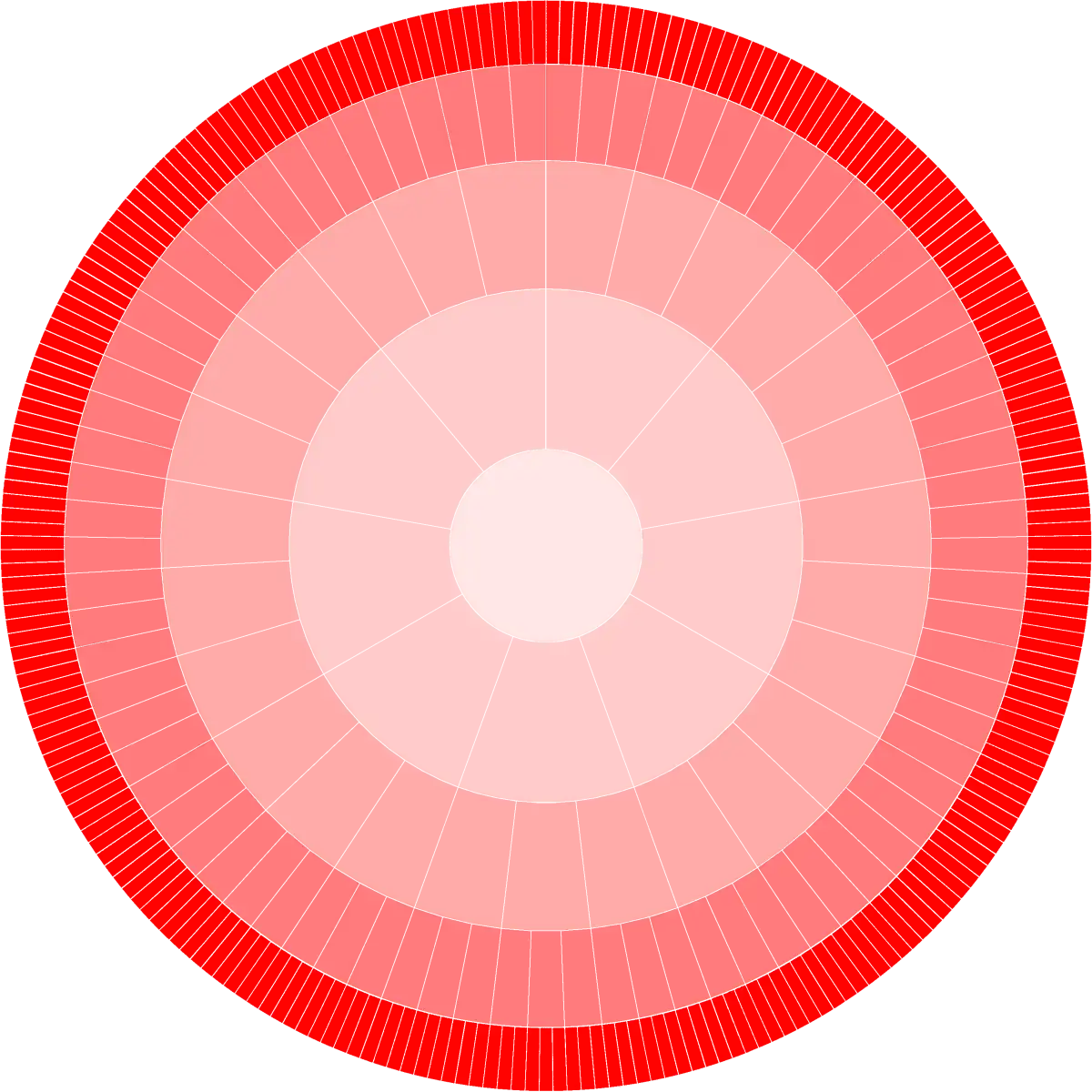
Glocally balanced subsidiarity
The proposed system applies one constitutional principle throughout the entire structure: every responsibility belongs at the lowest governance level capable of handling it effectively, fairly, and sustainably.
Local and regional governance therefore carries most of the responsibilities connected to everyday life and physical territory, while bloc and global authority remains limited to tasks that genuinely require coordination at those scales.
CC BY-SA 4.0 United.Earth Initiative
Subsidiarity is the constitutional principle that allocates authority throughout the proposed system. Every governing responsibility must remain at the lowest level capable of handling it adequately, fairly, and sustainably.
Authority moves upward only when the scale, interdependence, cross-border effects, or systemic consequences of a matter exceed the capacity of the levels below. This creates a constitutional presumption in favour of lower-level authority.
The burden of justification rests with the higher level seeking to assume or retain a responsibility. It must demonstrate that lower-level action is structurally insufficient and that intervention from above is necessary. The scope of the intervention must also be proportionate to the problem and leave the greatest possible political, legislative, and administrative freedom to the levels below.
Greater efficiency, administrative simplicity, or global uniformity alone does not justify moving authority upward.
A higher level may establish common baseline standards, boundary conditions, or frameworks for coordinated action where necessary, while leaving implementation and all remaining decisions to lower levels. This allows higher levels to be decisive within narrow areas of responsibility without becoming broadly dominant.
Subsidiarity must be embedded in the Earth Constitution as a binding rule for the allocation and interpretation of governing competence. The Constitution defines the responsibilities that necessarily belong to each higher level and the procedures through which additional authority may be transferred upward.
Responsibilities that have not been constitutionally assigned or shown to require higher-level action remain at the lowest capable level.
The judicial system must be able to review whether legislation or executive action respects necessity, proportionality, and the constitutional distribution of authority. Lower governance units retain the full right to challenge higher-level overreach through this constitutional process.
Valid higher-level law remains binding while such a challenge is resolved, preserving a coherent legal order without permitting unilateral nullification.
Applied throughout the structure, subsidiarity protects local autonomy, clarifies responsibility, reduces unnecessary bureaucracy, and prevents power from drifting upward by default. It also gives higher levels the authority required to address problems that lower levels cannot solve alone.
The result is a glocally balanced system: strong local self-government, substantial regional responsibility, limited bloc and global mandates, and effective coordination wherever the integrity of the whole requires it.
The application of this constitutional principle to the specific governance levels is described under The levels of governance.
7.4 Democratic governance and cultural identity
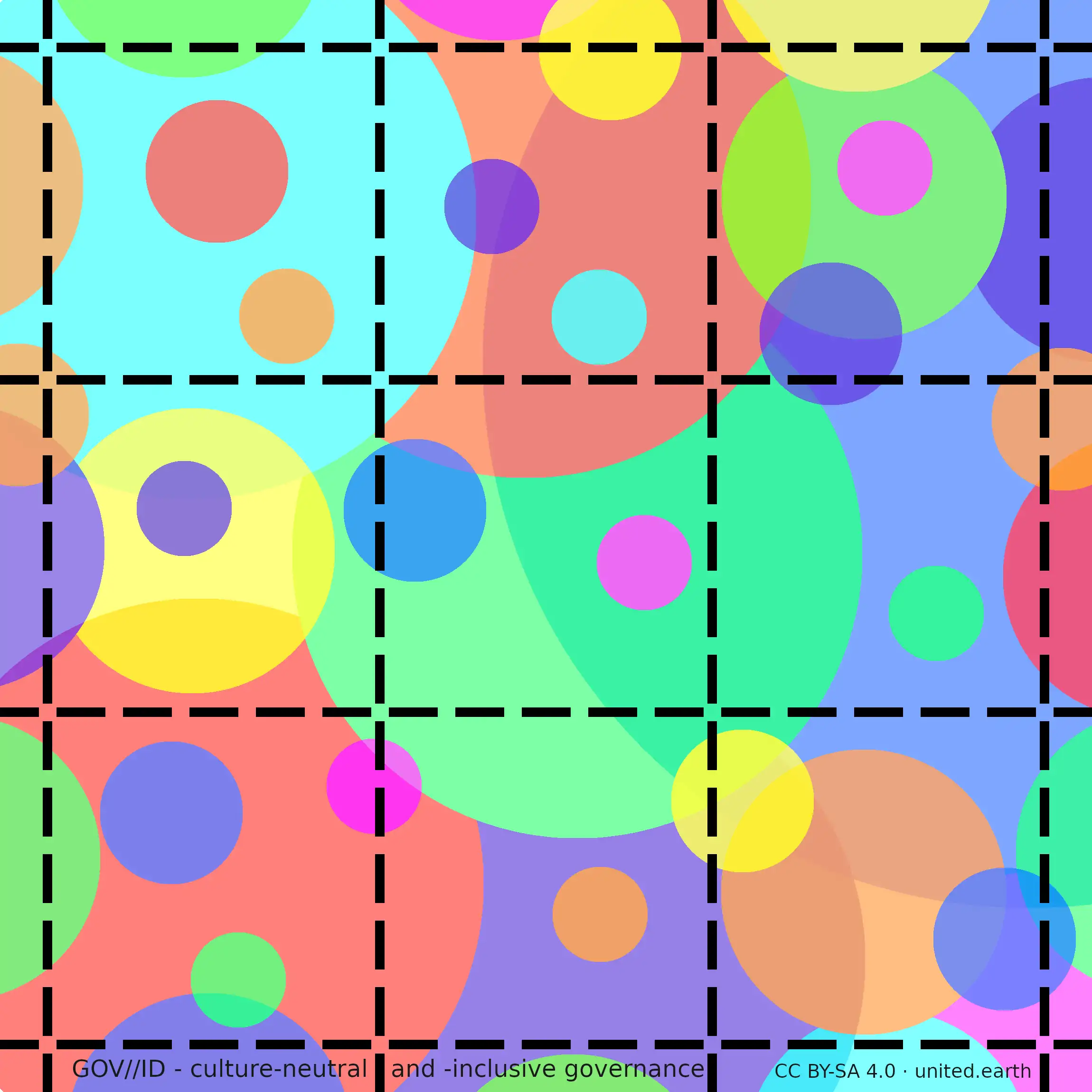
Cultural identities overlap, cross political boundaries, and coexist within the same governance units.
GOV//ID: equal standing across cultural identities
The squares in this illustration represent governance units within the proposed geopolitical system. Their boundaries define the territorial scope of public responsibilities. They need not coincide with the boundaries of nations, ethnicities, religions, ideologies, or other cultural identities.
The same higher-level constitutional and legal framework applies across governance units, while laws at lower levels may differ wherever authority remains with those levels under the principle of subsidiarity.
The circles represent cultural identities, often overlapping one another and crossing political boundaries.
A governance unit may have a strong cultural character, including a large or overwhelming majority belonging to one identity. A democratic global system does not require demographic balance or cultural homogenisation. It does, however, require equal political standing and protection across cultural differences.
Demography describes society. It should not determine whose public institutions they are.
History shows that when political authority, recognition, security, and territorial control become tightly bound to a dominant cultural identity, constitutional change can become an existential identity conflict. In a crowded, multicultural, and interconnected world, a global democratic system must therefore be capable of protecting cultural continuity without allowing demographic dominance to become political exclusion.
Democratic outcomes may consequently reflect the beliefs and cultural composition of the citizens supporting them and may differ between governance units according to subsidiarity.
The purpose is not to remove culture from politics or to predetermine substantive democratic outcomes. It is to ensure that cultural difference does not translate into unequal civic status, exclusion, or permanent institutional domination.
This implies several basic design requirements:
- Territorial governance must protect and serve all citizens, including people belonging to minority or non-dominant identities.
- Civic rights and political standing must not depend on membership in a dominant national, ethnic, religious, ideological, or other cultural identity.
- Public authority must remain accountable to citizens through the common constitutional and democratic system, rather than to identity organisations as collective political persons.
- Citizens remain free to hold and express their religious, cultural, national, philosophical or ideological convictions, advocate political positions inspired by them, and vote according to their own judgement. Such convictions may influence political choices, while reasons advanced to justify common public decisions must be open to examination without accepting any identity’s claimed truth, authority or universal validity. Democratic decisions derive their authority from the common constitutional process.
Identity freedom within common public law
Religious, cultural, ideological, and other identity-based organisations remain free to organise, advocate, educate, and mobilise, and may own or steward property, maintain institutions, form intentional communities, and organise activities around their purposes.
Such institutions may use identity-based rules where they are intrinsic to their voluntary purpose: for example, cultural institutions dedicated to a particular tradition, such as monasteries, churches, mosques, or an intentional community organised around a shared conviction or way of life. Their members and residents nevertheless remain equal citizens under ordinary public law, with full access to public rights, courts, and services.
Control of an organisation, institution, or property does not by itself confer public territorial authority over a population, public law, political office, or the surrounding territory.
The same principle applies to global identity itself. A strong identity as an Earthling may motivate political action and help build global democracy, but it cannot give Earthlings superior constitutional standing over other cultural identities.
Living cultural heritage
Some identities are inseparable from particular buildings, landscapes, sacred places, and continuing practices. The constitutional order may therefore recognise protected cultural-heritage domains in which relevant communities receive defined custodial rights over preservation, ritual use, activity, and, where necessary to the character of the place, access.
These rights operate within the common public legal order. They do not by themselves create separate public jurisdictions or coercive authority. Where claims overlap or conflict, their scope must be defined through the common constitutional, democratic, and judicial system.
Cultural freedom therefore includes the right to express, develop, organise, protect, and transmit cultures, beliefs, languages, traditions, political ideas, and collective interests, subject to the equal rights of others.
The same approach applies to comprehensive political and economic ideologies. Post-ideological does not mean post-political, value-neutral, or without disagreement. Capitalism, socialism, communism, and related doctrines remain available as bodies of thought, political identities, and sources of analysis, but no economic doctrine needs to function as an unquestionable constitutional template.
Markets, democratic planning, public institutions, cooperatives, private enterprise, and other forms of economic organisation can instead be treated as practical instruments whose roles are determined democratically according to the Rights of Life, the commons principle, subsidiarity, knowledge, and the conditions of the policy area involved.
Taken together, these principles describe GOV//ID as a constitutional order: cultural identities can remain strong, free, politically relevant, and institutionally heard, while equal citizenship and common democratic institutions prevent demographic or organisational dominance from becoming unequal political status.
This requires a fundamental redefinition of the traditional relationship between cultural identity, territory, and sovereignty. Cultural communities retain their identities, organisations, heritage, political influence, and cultural continuity, but public territorial governance derives its authority from citizens within the common constitutional order rather than from any collective identity.
The constitutional principle is therefore clear even where its detailed implementation remains open: cultural identity may shape society and politics, but it does not constitute or own public governance.
United Earth proposes GOV//ID as a permanently protected, unamendable principle of a future Earth Constitution. Its constitutional adoption and legal formulation belong to the democratic constituent process. GOV//ID is already a non-negotiable foundation of the United Earth-operated AGORA proto-system, but that platform condition does not constitute advance constitutional approval by Earth Citizens.
The transition to this constitutional principle is intended to proceed voluntarily, state by state, through lawful democratic and constitutional decisions within each existing polity. No society is to be forced from outside to abandon its present constitutional relationship between cultural identity and governance.
Different states may therefore move at different speeds and through different transitional arrangements, while the long-term constitutional direction remains GOV//ID.
The underlying identity–governance analysis is developed in A new toolset: ID=GOV and GOV//ID. The gradual, voluntary transition from existing constitutional arrangements toward GOV//ID is developed in HOW under Cultural identities and governance and Security and sequencing.
7.5 GeoWeMe: Earth, society, and the individual
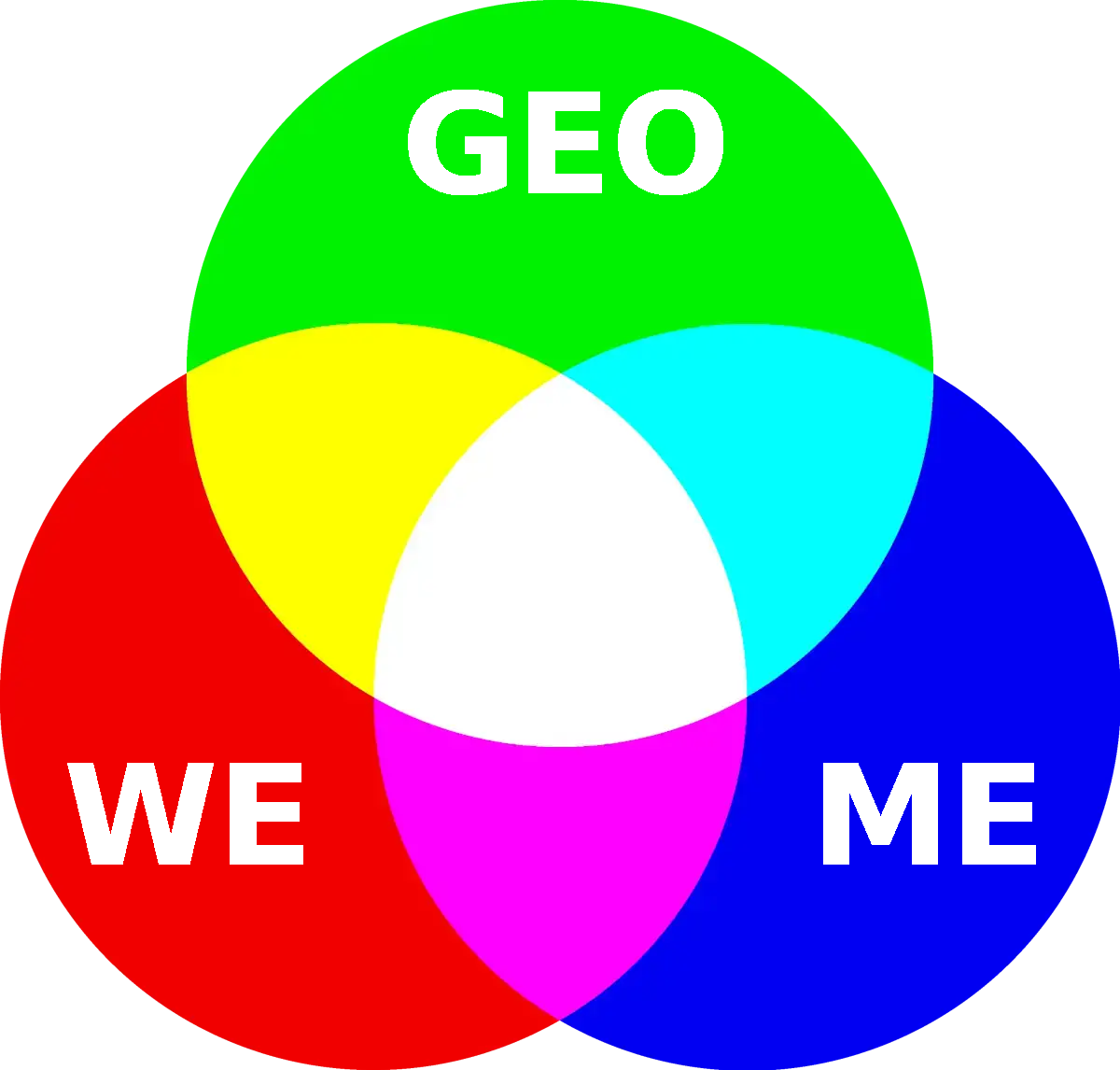
Additive red, green, and blue (RGB) light mixing.
Political ideologies and parties use colour labels inconsistently and often misleadingly. GeoWeMe uses the RGB model as a mental map for three recurring dimensions of political judgement.
Three dimensions of political judgement
GeoWeMe describes three distinct dimensions that recur across political questions:
GEO, shown in green, represents Earth and the material conditions of life: ecosystems, resources, physical environments, the biosphere, planetary systems and the interests of future life. Geo is present at every scale, from a local habitat or watershed to the planet as a whole.
WE, shown in red, represents collective life: communities, institutions, solidarity, justice, shared infrastructure, public capacity and the common conditions through which people live together.
ME, shown in blue, represents the individual: freedom, autonomy, dignity, diversity, personal interests and the right to define and pursue one’s own life.
These dimensions are present simultaneously. Human beings are individuals, participants in collective life and inhabitants of physical and ecological systems. Political questions therefore involve different combinations of Geo, We and Me, even when one dimension is much more prominent than the others.
GeoWeMe does not prescribe how the three should be balanced. That judgement belongs to each person.
One individual may consistently place exceptional weight on personal freedom, another on collective provision, another on ecological protection, while many will weigh the same concerns differently from one issue to the next.
There is consequently no correct midpoint and no required three-way balance. The white centre of the RGB model does not represent a political ideal to which citizens are expected to converge.
From political packages to individual judgement
Political ideologies and organisations can provide relatively stable interpretations and combinations of political concerns. As discussed in the analysis (WHY), representative party systems commonly assemble such positions across many policy areas into political packages through which citizens exercise electoral choice.
GeoWeMe looks beneath those packages. It provides a simple mental map for recognising that Geo, We and Me remain distinct dimensions of judgement and that each person may weigh them differently from one issue to another.
The proposed democratic system is designed around this freedom of judgement. Political organisations, philosophies, religions, movements and ideological traditions remain free to advocate particular interpretations and priorities, while citizens can approach political questions directly and form their own synthesis issue by issue.
Knowledge, values and the collective outcome
Personal political judgement remains distinct from the knowledge-based architecture of the system.
The Policy Area Index (PAI) is the common structure used to identify and organise the policy area, or combination of policy areas, relevant to a question; it is developed further in PAI: Policy Area Index. Science, Ethics and Culture (SEC) are the three corresponding knowledge and competence dimensions through which relevant scientific, ethical and cultural understanding is brought into political deliberation; they are developed further in SEC: Science, Ethics and Culture knowledge and competence. Together, PAI×SEC helps participants identify relevant evidence, uncertainty, consequences, ethical questions and cultural understanding.
This knowledge-based structure does not determine how an individual should weigh Geo, We and Me. Values and priorities remain part of personal political judgement. Knowledge instead improves the conditions under which those judgements are made.
AGORA then provides the democratic environment in which individuals can learn, deliberate, develop proposals, consider alternatives and express their political judgement directly.
The collective outcome emerges through the aggregation of many such individual judgements. Strongly different value orientations can remain present within the electorate, but they no longer have to be compressed into a small number of permanent ideological packages before they can influence political decisions.
The system therefore seeks neither ideological uniformity nor a predetermined balance of values. It provides a common democratic and knowledge-based structure within which political differences can be expressed and resolved issue by issue.
A mental map, not an operational layer
GeoWeMe is an explanatory model for understanding this political logic. It is not itself an operational component of the proposed system.
Citizens are not classified according to Geo, We or Me. Proposals are not assigned GeoWeMe scores. The three dimensions receive no numerical weighting, they do not form part of voting procedures, and AGORA does not attempt to calculate an objectively correct balance between them.
The operational architecture consists instead of mechanisms such as AGORA, PAI×SEC, the SEC Councils, democratic procedures and the constitutional institutions described in the following chapters. GeoWeMe helps explain why that architecture is designed to let individuals form political judgements directly rather than requiring democratic authority to pass through fixed ideological identities.
The sequence in the image below illustrates the distinction. Political differences remain, and individuals continue to combine and weight Geo, We and Me in different ways. What changes is the structure through which those differences enter democratic decision-making: from fixed political packages toward direct, issue-based judgement within a shared democratic and knowledge infrastructure.
GeoWeMe maps the concerns. Citizens weigh them. Knowledge informs the judgement. Democracy determines the collective outcome.

7.6 Academic lock-up: from international to global
As stated in the analysis (WHY), how we frame a debate, especially at its most theoretical level, is crucial. It defines much of the conceptual space within which that debate can develop, and thereby also influences other arenas, including the press and public debate.
If global democracy is to be examined as a real structural possibility, we also need concepts that do not presuppose the permanence of the system we are trying to examine. Academic language does not merely describe political reality. It can also embed assumptions about which actors, structures, and forms of political organisation are considered normal or even possible.
The following suggestions are by no means all it takes, but they may provide a starting point for opening this conceptual space and creating a much-needed new direction:
Global Relations (GR)
We propose renaming the entire field. The term international presupposes that nations and nation-states are the primary building blocks of political order. This embeds the current system into the discipline’s base language before the analysis has even begun.
Global Relations provides a wider frame. It acknowledges global reality as the main field of study, within which nation-states, nations, blocs, regions, global institutions, corporations, cultural identities, transnational networks, individuals, and other actors can all be analysed without defining any one of them in advance as the permanent primary unit of political order.
Global realism
We also propose Global realism as a new theoretical project within this wider field.
This should not be understood simply as another version of traditional realism. Realism contributes essential insights into power, security, conflict, interests, incentives, and the constraints produced by political structures. But these insights need to be combined with other important developments within political theory and what is now called International Relations.
Constructivism shows that political structures, identities, interests, and norms are not simply fixed conditions, but can be produced and transformed through human interaction and institutional development. Liberal institutionalism and theories of interdependence contribute important knowledge about cooperation and the effects of institutions. Functionalism and integration theory help explain how shared problems can create pressures for governance beyond existing political boundaries. Governance and governability research examines what actually makes complex political systems capable of coordinated action. Other approaches contribute further insights into institutional design, security, ecological limits, and political change.
These perspectives should not remain separated into competing theoretical camps when their insights are needed to understand the same global reality.
Global realism would therefore be a synthetic and problem-oriented approach. It should take existing power structures and material constraints seriously while also recognising that political structures themselves can be deliberately transformed.
Its central question is broader than the traditional question of how states behave under international anarchy:
What political structures are realistically capable of handling the global reality humanity actually faces?
Climate change, biodiversity loss, weapons of mass destruction, pandemics, technological risks, global economic interdependence, and other planetary challenges cannot be understood only as problems occurring within a permanent system of sovereign nation-states. The viability of that system itself must become part of the analysis.
In this sense, global realism combines realism about constraints with realism about change. It does not assume that history will automatically produce a global political system. It asks whether such a system is instrumentally necessary, and if so, how humanity can consciously construct it before global crises force structural change under far worse conditions.
8. A matrix of geopolitical power
A well-functioning geopolitical system relies on a balanced structure of governing units, defined by precisely defined levels and by three layers: the traditional branches, councils, and the global network connecting governance and people. Precise naming and clear distinctions between these dimensions are essential for democratic participation, effective coordination, and accountability.
The following chapters outline a first-principles rebuild of humanity’s political architecture — repurposing and supplementing today’s geopolitical condition to replace fragmentation with a coherent structure. It is designed for peacekeeping, cooperation, and global democratic governance, protecting the local and delegating power upwards only where strictly necessary.
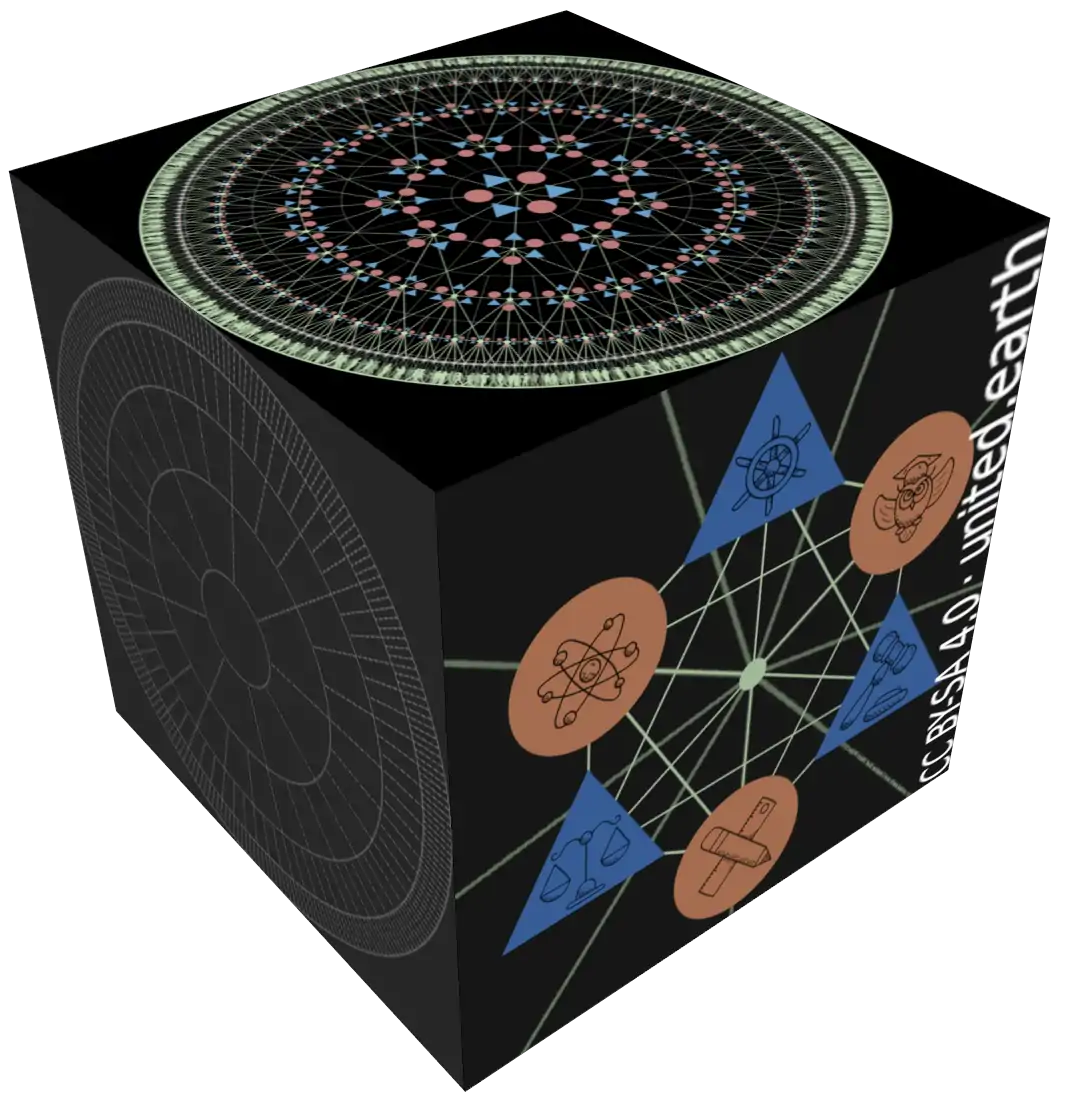
The three dimensions of the matrix
A geopolitical system can metaphorically be seen as a combination of three dimensions:
- The “horizontal”: Units of governance forming a complete pattern on each level (right)
- The “vertical”: Levels of the system (left)
- The “depth”: Layers of different components that are present in all units and on all levels (top)
Advisory bodies, oversight institutions, and long-term guardianship functions — historically added piecemeal as horizontal extensions of the three powers — are here gathered into a single, clearly defined layer of Councils, with explicit mandates for ethics, science, and culture.
The only genuinely new layer is the digital public square: a constitutional infrastructure that connects all components across all dimensions and provides a knowledge-based, direct, and fair interface for political participation. We propose calling this layer AGORA.
We do not insist on a single unifying term for this mental model, though in this overview we use the term “GeoMatrix”.
8.1 Reading the GeoMatrix
The GeoMatrix is a conceptual model to describe how political authority is organised in our proposed system. It does not prescribe final borders, exact numbers of units, or complete institutional procedures. Instead, it separates three structural questions that are currently often mixed: at what scale authority is exercised, which governance units exercise it, and which institutional systems operate within them.
A governance level is a complete constitutional scale within the hierarchy, from local to global.
A governance unit is one territorial political entity situated at a particular level. Together, the units form the complete territorial pattern of that level.
A governance layer is a recurring functional and institutional system that operates within governance units and connects them across levels.
In the GeoMatrix, the levels form the vertical dimension, the units form the horizontal pattern, and the layers form the depth dimension. None of these dimensions is sufficient alone.
Levels without layers identify where authority exists, but not how it functions. Layers without levels identify institutional functions, but not the scale and jurisdiction within which they operate. The governance units are where these dimensions meet and become operational.
These capacities are not gathered into one institution. They are differentiated, distributed, and connected through the matrix.
It may be tempting to think of the Policy Area Index (PAI) as a fourth dimension of the GeoMatrix, but we would rather define it separately as the shared political classification used throughout the whole matrix. It structures the policy domains and relationships through which the levels, units, and layers operate. The corresponding knowledge and competence are provided through Science, Ethics and Culture (SEC), creating the PAI×SEC relationship used throughout the system.
The following parts build the architecture in sequence.
- The levels of governance describe the levels and the units that form them.
- The layers of governance introduce the principle of governance layers.
- AGORA, The three Councils, and The three branches describe the three governance layers.
- The units of governance describes how a complete governance unit operates, and concludes by showing the resulting architecture at civilisational scal
- The remaining chapters then examine how the completed architecture functions in relation to specific systemic purposes and conditions, including peacekeeping, economic organisation, Earth civilisation, and Earth Citizenship.
The GeoMatrix is a working structural model, not a final constitutional blueprint. Exact boundaries, mandates, numbers of units, and institutional procedures must be developed, tested, and decided through the democratic process itself.
8.2 Defining the names of the levels
The UE proposal requires a precise and consistent vocabulary for its governance levels and units. These terms recur throughout the constitutional, institutional, administrative, and democratic architecture. They are used when describing jurisdiction, subsidiarity, representation, authority, institutional relationships, and the distribution of responsibilities between governance units.
Ambiguity in the names of the levels would therefore propagate throughout the entire system.
Each level is consequently identified through a consistent relationship between a noun and an adjective. The noun names an individual governance unit. The corresponding adjective names the level and describes the institutions, responsibilities, and processes associated with it.
| Unit | Plural | Adjective and level name |
|---|---|---|
| globe | – | global |
| bloc | blocs | blocal |
| sub-bloc | sub-blocs | sub-blocal |
| region | regions | regional |
| locus | loci | local |
The five-level model accommodates the transition and preserves institutional continuity. The long-term role of the sub-blocal level is discussed under The sub-blocal level (sub-blocs).
globe – global
The global level contains one unit: the globe, meaning Earth as a whole, so the plural form becomes irrelevant here. These terms need no grammatical changes.
bloc – blocs – blocal
Within the blocal zone, blocs are the major territorial units immediately below the global level. They form the principal macro-territorial structure for continental land and can also include large nearby islands or archipelagos where a bloc relationship is functionally appropriate.
The blocal level is therefore one of two possible higher territorial paths within the global state. Regions within the global zone can instead connect directly to the global level.
The adjective blocal is introduced to complete the pattern found in global, regional, and local.
sub-bloc – sub-blocs – sub-blocal
Sub-blocs are intermediate units between blocs and regions. They inherit the new adjective form.
region – regions – regional
These terms need no grammatical changes.
locus – loci – local
A locus is one unit of local governance, while loci is the plural. These are established words used here in a specific structural sense, giving the local level a precise unit name parallel to bloc and region. We realise that the terms locus / loci may seem a bit unfamiliar in a political context, and perhaps they aren’t the best candidates either, so we suggest “local community” as a valid alternative.
8.3 Defining other common terms
The terms above constitute the structural vocabulary of the GeoMatrix. Other familiar words remain necessary when describing the existing geopolitical system, its history, and the transition towards one democratic global state.
However, many of these words are used inconsistently. The following definitions establish how such words are used within this proposal.
State
In this proposal, the term state is reserved for the complete global constitutional order. The future system constitutes a single democratic global state, with Earth Parliament as its supreme legislative institution, a global judicial system, and an Earth Government exercising executive authority within constitutionally defined global domains.
The blocs, sub-blocs, regions, and local communities are not states. They are subsidiary governance units within the global state, with responsibilities and authority allocated according to the Earth Constitution and the principle of subsidiarity.
The blocs occupy a distinct intermediate position. They are federated constituent units with constitutionally protected territorial executive sovereignty within their territories in the blocal zone. This includes administration and emergency preparedness, authority over level-specific policing exercised subsidiarily through lower governance units, and territorial military authority at the bloc level.
Blocs therefore hold the principal higher territorial responsibility for legitimate coercive force within the blocal zone, subject to the Earth Constitution and valid global law. Within the global zone, the corresponding higher territorial executive and security functions belong directly to the global level.
They are nevertheless not sovereign states. Valid global law applies within their territories, Earth Parliament holds supreme legislative authority within the global constitutional order, and disputes concerning competence are resolved through the global judicial system.
The model therefore combines one global state with distributed territorial executive power.
Nation and nation-state
A nation is a sociocultural community. It may be shaped by shared history, language, culture, institutions, ancestry, territory, political experience, or collective self-understanding. A nation is therefore an identity, not a governance level.
A nation-state is a territorial state whose legitimacy and public identity are tied to a particular nation. The term combines two conceptually different phenomena: cultural identity and territorial governance, and is a prominent historical example of how the two can become closely coupled.
It is also structurally unsuitable as the name of a governance level. Existing nation-states range from very small island- and microstates to continental entities with populations exceeding one billion. They cannot be treated as equivalent units within a coherent hierarchy of political scale.
For these reasons, this proposal does not use nation-state as a structural term, and nation is consequently used only for the sociocultural construct.
Country
A country is an imprecise everyday term commonly used for an independent state, a nation-state, its territory, its population, or some combination of these. It is also used to describe the opposite of urban landscape: as in “countryside”, or “out in the country”.
Because it does not clearly distinguish governance, territory, population, and identity, it cannot define a constitutional unit or governance level.
This proposal will never use the term, and we will have to discourage its use in common language for other than that last-mentioned meaning.
Region
The term region is used in many different ways and contexts: parts of continents, international groupings, cultural territories, economic zones, ecosystems, metropolitan areas, and administrative districts. This flexibility makes it useful in ordinary language but imprecise as a structural term.
The proposed system reserves region for one specific governance level: the functional and culture-inclusive level immediately above local governance. Within the blocal zone, regions connect upward through a bloc, with a transitional sub-blocal level where that remains necessary. Within the global zone, regions can instead connect directly to the global level.
This allows the term to correspond with established concepts such as city region, metropolitan region, bioregion, county (or similar terms in other languages), and comparable territorial units that coordinate physical systems and public responsibilities beyond the capacity of individual localities. A well-known example is the phrase “Europe of regions”.
Large continental and subcontinental political groupings are often referred to as ‘regional’ in academic and geopolitical discourse. We instead promote using bloc, since the term region is now reserved.
9. The levels of governance
As subsidiarity is the constitutional rule for allocating authority, this chapter applies that to the five levels of the GeoMatrix: global, blocal, sub-blocal, regional, and local.
Each level contains governance units defined by territorial scale and functional capacity rather than cultural identity. The following chapters describe the constitutional position, principal responsibilities, and administrative role of each level, together with its relationship to the levels above and below.
The five-level structure accommodates the transition and allows the long-term role of intermediate levels to be evaluated under subsidiarity. The particular role and possible long-term redundancy of the sub-blocal level are discussed below.
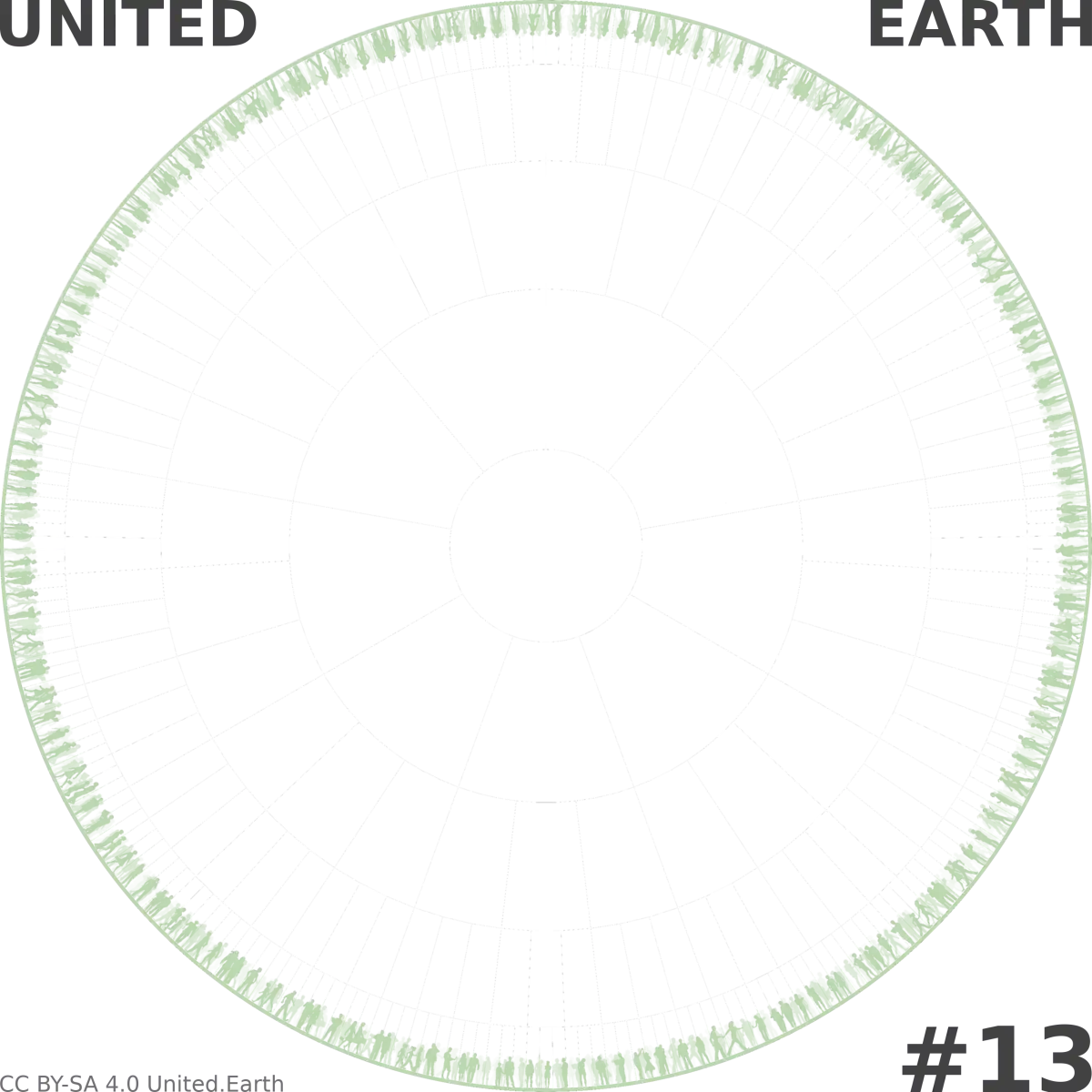
WHEEL < 13/18 >
Circular hierarchy
Like in the analysis (WHY) and the method (HOW), we use the “Earthwheel” model to visualise the political levels: the global, blocal*, sub-blocal*, regional, and local.
The model is highly abstracted, with the number of subdivisions at each level kept to a minimum to ensure readability and maintain focus on the principles rather than precise quantities.
* See below about this new form of the term ‘bloc’
Disclaimer: The estimated real-world scale and distribution of governance units discussed in the following sections are rough estimates. Unlike the minimal 9-3-3-3 subdivision used in the illustration, they are intended to explore what a complete global structure might require.
They are not predictions, measurements, or fixed requirements.
Future research, constitutional development, and democratic deliberation will be required to determine the actual number and boundaries of governance units at each level. Both may also change over time. Taken together, these estimates provide an order-of-magnitude model rather than a fixed nested formula. Their combined institutional implications are developed under The civilisational scale.
9.1 The global level

Position
The global level is the highest level of the GeoMatrix and contains one governance unit: the globe, meaning Earth as a whole. It is necessary because some systems, risks, and responsibilities are inherently planetary and cannot be governed coherently by any bloc or group of blocs acting separately.
The global level should not be confused with the global state. The global state comprises the complete constitutional order across all levels, while the globe is the single governance unit at its highest level.
Authority
Earth Parliament is the supreme legislative institution within the global constitutional order. Valid global law applies throughout the system and prevails over conflicting law at lower levels.
This legislative authority is not unlimited. Global competence is constrained by the Earth Constitution, subsidiarity, necessity, proportionality, and judicial review. The global judicial system resolves constitutional disputes concerning the distribution and legitimate exercise of authority between levels.
Earth Government exercises direct territorial executive authority within the global zone and direct executive authority within other constitutionally defined global domains and functions.
Across the blocal zone, it does not possess general territorial executive authority over bloc territory. There, territorial execution normally remains with the blocs and their subsidiary governance units, except where the Earth Constitution assigns a specifically global function or jurisdiction.
Functions
The global level maintains the shared constitutional and legal order, governs the global zone and planetary commons, coordinates responses to cross-bloc and existential risks, and establishes binding global frameworks where action at lower levels is structurally insufficient.
Its responsibilities include planetary systems and conditions such as the atmosphere, climate system, oceans, polar domains, near-Earth space, planetary ecological systems, globally shared digital infrastructure, systemically significant public AI systems, oversight of the bloc-based peacekeeping system, and other commons and risks whose effects cross territorial boundaries.
The global zone gives some of these responsibilities a direct territorial expression. Within it, regional and local governance continues under subsidiarity while the global level performs the higher territorial executive, security, and enforcement functions that blocs perform within the blocal zone.
Across the blocal zone, global law is normally implemented through the blocs and their subsidiary governance units.
The global level has no single capital or central headquarters. Its physical presence is distributed through two complementary networks.
Global constitutional precincts located beside the principal institutional centres of the blocs maintain a continuous global–blocal interface. A second network of global-zone hubs provides institutional and operational presence within the directly global territorial sphere.
Earth Parliament, Earth Government, the global judiciary, the Councils, AGORA, research, archives, communications, stewardship, emergency systems, security functions, and other global capacities can be distributed across these locations according to function.
Together, the two networks create a distributed global capital geography without allowing any one city, bloc, island, or region to become the physical centre of the global system.
Transition
No existing institution combines the democratic legitimacy, legislative authority, judicial system, and executive capacity required at the global level.
Existing international institutions contain substantial knowledge, experience, infrastructure, and technical capacity that should not be discarded. Relevant institutions may be transformed and integrated into the emerging global constitutional order, but the democratic authority of the global level must ultimately be established through a new constitutional process.
Name
The term international community is structurally unsuitable for this level because the proposed order is not a community between sovereign states, but the highest governance level of one global constitutional system. The word planetary is a very probable long-term winner, in line with the Solar Commons principle; however, at the present stage of the project, we have stuck with globe and global. The word globe comes from the Latin globus (sphere or round mass), which entered English via Old French to describe a physical sphere before expanding in meaning to encompass planet Earth as a whole.
Scale and Distribution
By global level, we mean the governance unit of planet Earth.
Its field of responsibility, however, extends beyond Earth wherever human activity enters domains governed under the Solar Commons principle, including near-Earth space, the Earth–Moon system and, as human activity expands, other relevant locations and celestial bodies.
This extension of global responsibility does not create additional governance levels or equivalent territorial units. The global constitutional level remains one.
9.2 The blocal level (blocs)

Position
The blocal level is the highest territorial governance level within the blocal zone. Blocs form the principal macro-territorial structure for continental land and can also include large nearby islands or archipelagos where close geographic proximity, functional integration, and governance scale make that relationship appropriate.
Each bloc normally contains multiple regions and loci or local communities, with sub-blocs retained during the transition where institutional continuity requires them.
This level is necessary both to organise the blocal zone into a workable federation and to prevent territorial executive and coercive power from becoming concentrated in one global government. The blocs create multiple large centres of constitutionally protected power within one shared global order.
Authority
The blocs have a unique position within the GeoMatrix.
De facto, they exercise constitutionally protected territorial executive sovereignty within their respective territories in the blocal zone. They hold authority over administration and emergency preparedness, delegate policing authority to level-specific police services at lower levels under subsidiarity, and hold territorial military authority at the bloc level. They are not administrative departments of Earth Government, and Earth Government does not exercise general territorial command over them.
De jure, the blocs are constituent governance units within the global state. The Earth Constitution applies within their territories, and valid global law prevails in areas that fall within constitutionally legitimate global competence. Blocs cannot unilaterally invalidate such law, although they retain the full right to challenge it through the global judicial system.
Outside areas governed by valid higher-level law, the blocs retain legislative and executive authority according to subsidiarity. Their position therefore combines de facto territorial executive sovereignty with de jure membership in a binding global constitutional order.
Functions
Blocs provide the principal higher territorial executive capacity throughout the blocal zone. Within their territories, they implement global law through their own institutions and coordinate responsibilities that exceed the capacity of regions and, while they remain, transitional sub-blocs.
Their functions may include bloc-wide security, peacekeeping, macroeconomic stability framework, major infrastructure and energy systems, resource coordination, cross-territorial ecological management, and other responsibilities whose scale requires action across large populations and territories.
The blocs also form the primary territorial balance of power within the global peacekeeping system. Their constitutionally protected control of the principal land-based coercive capacity is a safeguard against absolute global tyranny.
Transition
The blocal level must be developed from a highly uneven collection of existing structures.
Some current continental or subcontinental states already operate at approximately this scale. Some existing federations, unions, and regional organisations may provide foundations for future blocs. Other areas will require the consolidation, internal federalisation, division, or creation of new structures.
Blocs do not need to become culturally homogeneous. Their populations and territories may contain many overlapping nations, languages, religions, ideologies, and other identities, all of which can continue within the shared constitutional order with equal civic standing and protection.
Name
This level is already represented by several terms: union, federation, alliance, etc. Finding a general term among them doesn’t seem possible, since they are all too specific to the type of organisation, and none align well with the UE proposal. Therefore, bloc has been chosen, since it is already a household term in this context and since it is short and practical. The word bloc comes from the French bloc (a unified group or coalition), which developed from the Middle Dutch blok (a solid log or trunk) to describe a tightly bound collective. Today, it functions as a household term for an alliance of actors or nations with a common purpose.
Scale and Distribution
Earthwheel 13 illustrates the blocal level with nine blocs. A complete real-world structure may require approximately 20 to 40 blocs. See an illustrative draft with 38 blocs
In the mature four-level structure, these form the permanent higher territorial layer between the regional and global levels across the blocal zone. Their actual size and shape would vary substantially according to population, geography, infrastructure, ecological conditions and the functional balance required between the blocs.
9.3 The sub-blocal level (sub-blocs)

Position
The sub-blocal level is situated between the blocs and the regions. It provides an intermediate territorial and administrative scale for responsibilities that exceed the capacity of individual regions but do not require bloc-wide governance.
Its principal justification is transitional. It allows the system to preserve institutional and legal continuity while the existing geopolitical structure is reorganised.
Authority
Sub-blocs are subsidiary governance units within their respective blocs. They do not possess territorial sovereignty or an independent monopoly on legitimate force.
They exercise legislative, executive, and judicial authority within responsibilities allocated to them under the Earth Constitution, bloc law, and the principle of subsidiarity. Their authority remains subject to valid law at the global and blocal levels.
The exact extent of sub-blocal authority may vary during the transition and may diminish as functions are redistributed more coherently between blocs and regions.
Functions
Sub-blocs may coordinate multi-regional public services, infrastructure, administration, and other systems whose practical scale lies between regional and blocal governance.
They can also provide democratic representation and institutional coordination across groups of regions while maintaining continuity in legal systems, public administration, records, taxation, and service provision during the transition.
The long-term functional case for this level is weaker than for the global, blocal, regional, and local levels. Its responsibilities should therefore remain subject to continuing review under the principle of subsidiarity.
Transition
Most present-day nation-states are situated approximately at the sub-blocal scale. The same applies to many existing constituent entities within very large states, including provinces (e.g.China, Canada), states (Brazil, USA), and comparable first-order administrative divisions (e.g. oblasts in Russia, union territories in India).
Retaining these structures temporarily can reduce disruption while present-day sovereignty is reorganised within the global constitutional order and responsibilities are redistributed between the governance levels.
Over time, many sub-blocal responsibilities may move partly upward to the blocs and mainly downward to the regions. The level may consequently become redundant. Its long-term role should therefore remain subject to constitutional review under the principle of subsidiarity.
Name
The term sub-bloc derives directly from bloc. The term sub-bloc derives directly from bloc and makes the level’s intermediate position explicit. Because its role is primarily transitional and may not be permanent, a more elaborate unique name is not necessary at this stage.
Scale and Distribution
Earthwheel 13 illustrates three sub-blocs within each bloc. A complete transitional structure might contain as many as approximately 50 sub-blocs within a bloc and 2,000 globally.
The sub-blocal level is not included as a permanent layer in the mature scale model. As it is phased out, its responsibilities are redistributed under subsidiarity, mainly downward to regions and partly upward to blocs.
At the scale of the complete system, the approximately 2,000 possible transitional sub-blocs are also numerically small compared with the tens of thousands of regions and approximately two million loci. Their inclusion or removal therefore has little effect on the overall civilisational order of magnitude.
9.4 The regional level (regions)

Position
The regional level is the primary governance level above the local level. Within the blocal zone, it sits below the transitional sub-blocal level where that level applies, and directly below the bloc where it does not. Within the global zone, regions can instead connect directly to the global level under subsidiarity.
At the regional level, Earth is organised through two constitutionally distinct types of governance units:
societal regions and nature regions (see Nature/humanity: 50/50).
Societal regions contain multiple local communities (loci), coordinate the physical systems of human society, and provide the primary functional connection between local life and governance at larger territorial scales. Nature regions protect and restore continuous ecosystems under ecosystem sovereignty. They may also contain permanently inhabited loci, but operate through a reduced, specialised regional architecture centred on ecological stewardship rather than the full range of ordinary societal governance.
This level is important because many physical, ecological, economic, and public-service systems extend beyond individual local communities but remain too geographically specific to be managed effectively at bloc level.
Authority
Societal regions exercise substantial and constitutionally protected authority within the areas they can govern effectively. Under subsidiarity, responsibilities remain at the regional level unless their scale or consequences require coordination above it.
Nature regions exercise a different form of constitutionally protected authority. Each has a dedicated regional stewardship authority whose primary mandate is ecological integrity under ecosystem sovereignty. Its duties include protection, restoration, monitoring, access, and regulation of permitted human activity. This mandate cannot be subordinated to ordinary economic, infrastructural, or political priorities by a regional or higher-level majority.
Where people live permanently within a nature region, a compact regional democratic body provides a common arena for the resident loci and a voice in matters affecting their communities and the region’s stewardship. Its democratic competence remains limited by ecosystem sovereignty; it cannot authorise ordinary settlement expansion, production, or resource extraction contrary to the nature region’s constitutional purpose. The stewardship authority is subject to constitutional oversight, independent review, and the courts, with knowledge and assessments from the SEC Councils. Within the blocal zone, the bloc provides the appropriate higher-level oversight; within the global zone, the global level does so.
Both region types remain subject to the Earth Constitution and to valid law at the higher governance levels applicable to their territory. Within bloc territory, this includes blocal law and, while that level exists, applicable sub-blocal law. Within the global zone, the regional level relates directly to the global constitutional order.
Regional boundaries and authority are determined by function rather than cultural identity. Cultural communities may cross or be concentrated within a region without determining its constitutional boundaries.
Functions
The regional level is the primary territorial level for physical and ecological coordination on land, with responsibilities differentiated by regional type.
Societal regions coordinate land-use planning, transport, energy, water, healthcare, education, settlement patterns, food systems, and other material networks and public services shared by several loci. They translate broader constitutional and policy frameworks into coherent territorial systems while leaving community-specific decisions to the local level.
Nature regions coordinate ecosystem protection and restoration, ecological monitoring, compatible access and activities, and stewardship across their resident loci. Public services and specialised AGORA, Council, and judicial functions can draw on the wider federated institutional networks rather than being reproduced as a full regional administration.
Transition
Regions may build on existing counties, city regions, metropolitan areas, bioregions, and comparable administrative units. Existing boundaries may be retained where they function well, but others may need to be reorganised according to population, ecology, infrastructure, settlement patterns, and administrative capacity.
If the sub-blocal level later disappears, regions within bloc territory become the primary governance units immediately below the blocs.
Name
The word region comes from the Latin regio (direction, border, or district), which derives from the verb regere (to guide, direct, or rule), sharing a root with rex (king), while res (thing or matter) has a separate etymological root. Today, it functions as a foundational spatial concept.
Scale and Distribution
Earthwheel 13 illustrates three regions within each sub-bloc. In the mature structure, however, regional scale is more usefully understood directly in relation to the blocs and the global system.
A complete structure might contain up to approximately 40,000 regions globally. Expressed simply against a system of approximately 20–40 blocs, this corresponds to an order of magnitude of roughly 1,000–2,000 regions per bloc, although regions within the global zone connect directly to the global level rather than through a bloc.
During the transitional five-level structure, regions within the blocal zone may instead be grouped through sub-blocs. A bloc containing around 50 sub-blocs would, at the same overall scale, correspond to roughly 20–40 regions per sub-bloc.
Actual numbers would vary substantially according to population, geography, ecosystems, settlement patterns, infrastructure and the division between societal and nature regions.
9.5 The local level (loci)

Position
The local level is the foundational level of the GeoMatrix. A locus is the governance unit closest to the physical places where people live, work, build relationships, participate in community life, and experience the consequences of political decisions.
This level is necessary because many responsibilities can be handled most responsively and democratically within the communities directly affected by them.
Authority
Loci hold a strong constitutional presumption of local autonomy. They exercise authority over all matters they can manage adequately, fairly, and sustainably without shifting significant consequences onto neighbouring communities or larger shared systems.
Their authority remains subject to constitutional rights and valid law at higher levels. Local autonomy cannot justify discrimination, identity-based domination, ecological destruction, or the externalisation of serious harms beyond the locus.
Higher levels may intervene only where local action is structurally insufficient or conflicts with legitimate higher law.
Loci also exist within nature regions wherever people reside permanently, including Indigenous communities and communities living in or around 1000-Year Earth Sanctuaries. Their self-government covers the civic affairs of the resident population, but does not confer authority to expand settlements, infrastructure, or production beyond what ecosystem sovereignty permits. A locus is a public governance unit for all its residents; a sanctuary is a purpose-bound stewardship arrangement. One locus may encompass one or several sanctuaries, as well as residents who do not belong to one. Civic rights and local representation do not depend on sanctuary membership.
Functions
The local level handles responsibilities closely connected to everyday community life. These may include local planning, housing and settlement, public spaces, community infrastructure, primary services, local mobility, care, cultural and civic facilities, local ecological stewardship, and the practical implementation of broader frameworks.
The locus is also the primary setting for direct democratic participation, civic organisation, and continuing interaction between citizens and public institutions.
Transition
Existing municipalities, towns, rural districts, urban districts, neighbourhoods, and other local structures may provide foundations for loci. Their boundaries may need to change where existing units are too large, too small, fragmented, or poorly aligned with real communities and settlement patterns.
Large cities may contain many loci and may require additional sub-local arrangements for neighbourhood governance. Such arrangements do not necessarily constitute an additional formal level within the GeoMatrix.
Name
The words location and local come from the Latin locus (place or location), with the plural loci (recommended: “low-kye” /ˈloʊ.kaɪ/) used to designate specific geometric, genetic, or physical points, while local is its common derivative. Today, it serves as a foundational concept across mathematics and science, but, most relevant here, it also serves as a foundational concept in human geography and political organisation, anchoring terms like localisation and local government to specific geographic centres.
Scale and Distribution
Earthwheel 13 illustrates three loci within each region. A complete structure might contain up to approximately two million loci globally.
At the upper working estimates of approximately 40,000 regions and two million loci, this produces a simple system-wide relationship of roughly 50 loci per region. Actual distributions would vary considerably: societal and nature regions have different functions, large cities may contain many loci, and sparsely populated or geographically isolated communities may require very different territorial arrangements.
At a global population of eight billion, two million loci would produce a mathematical average of approximately 4,000 people per locus. This is not a target population. Actual loci could range from urban communities within large cities to towns, villages, rural districts and island communities, with very large differences in population and territorial extent.
The 4,000-person average is nevertheless a useful scale check: it places the local estimate within a recognisable order of magnitude for community-level governance.